
Welcome to Replacing the Front Crankshaft Seal DIY!
In this article, I’ll provide a step-by-step guide on replacing the front crankshaft seal on a 2014 Škoda Octavia with a 1.6 TDI engine. The procedure is identical for the 2.0 TDI engine, and the steps outlined can be applied to other models within the Volkswagen Group, such as the Golf and SEAT León.
Important Note: Replacing the crankshaft seal requires removal of the timing belt. You can refer to my detailed guide on timing belt and water pump replacement, linked in the description below.
Required Tools and Preparations
- Tools:
- Timing tool kit
- Impact driver (or tools to lock the flywheel if unavailable)
- Socket wrench set (including 10mm sockets)
- Razor blade or gasket scraper
- Sealant (high-quality silicone sealant)
- Parts:
- Complete crankshaft seal and housing (the seal is integrated into the housing for these models)
- Preparations:
- Ensure the timing belt has been removed.
- Secure the vehicle on a lift or jack stands for easy access.
- Clean the work area to prevent contaminants from entering the engine sump.
Step-by-Step Instructions
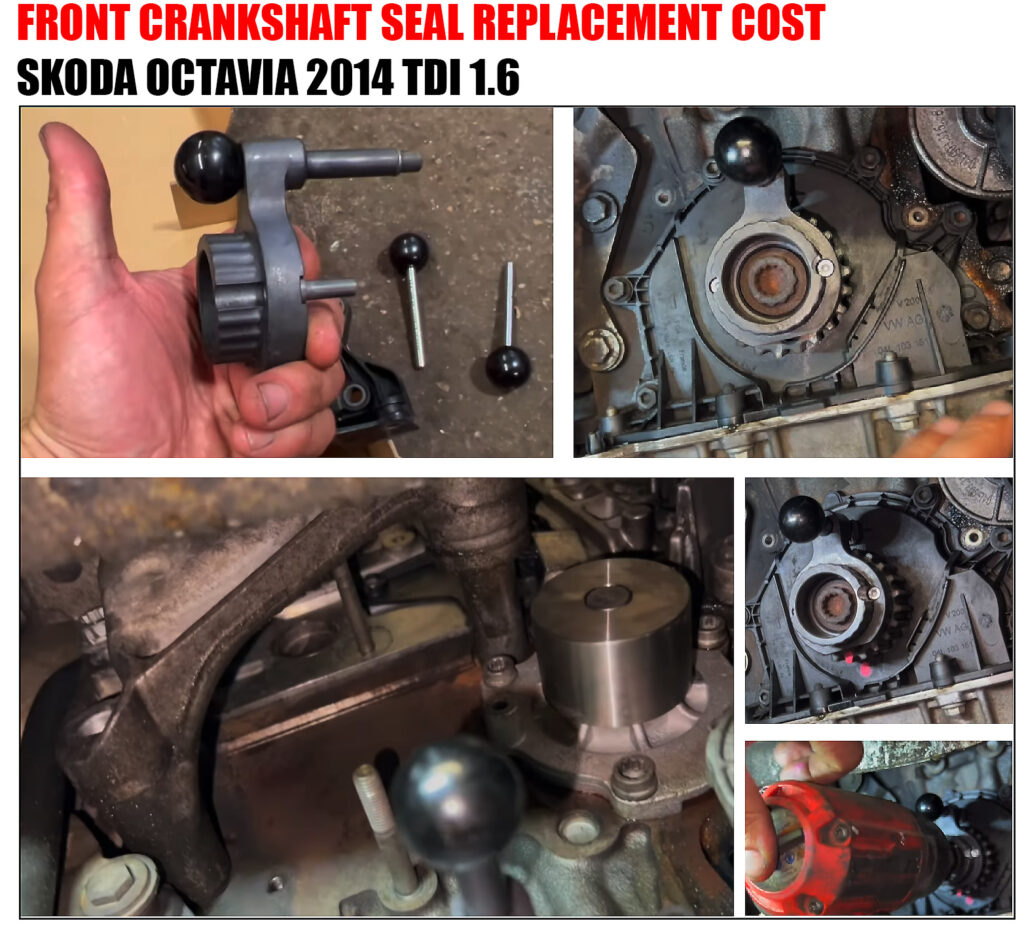
Step 1: Removing the Crankshaft Pulley
- Use an impact driver to remove the center crankshaft pulley bolt.
- If no impact driver is available, use a flywheel locking tool to stabilize the crankshaft.
- Carefully slide the pulley off. This model uses a flat alignment system on the crankshaft and pulley for proper positioning, so there’s no separate keyway.
Step 2: Removing the Crankshaft Seal Housing
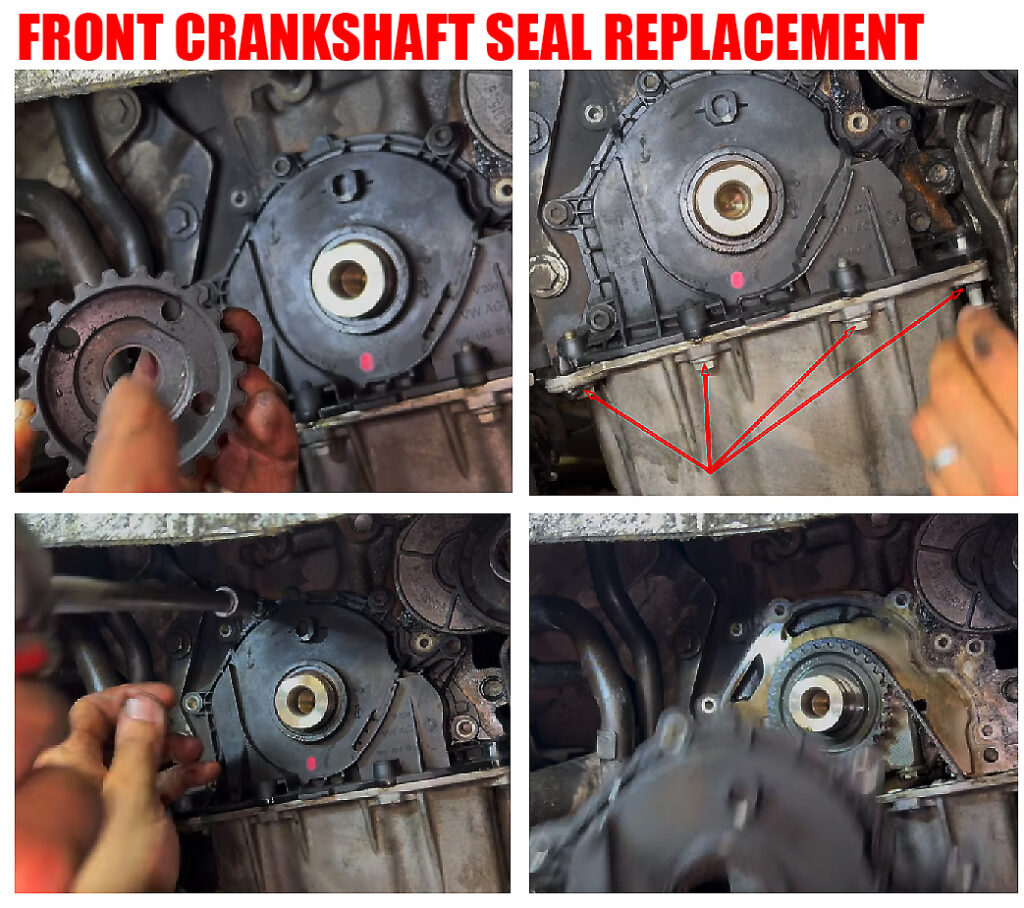
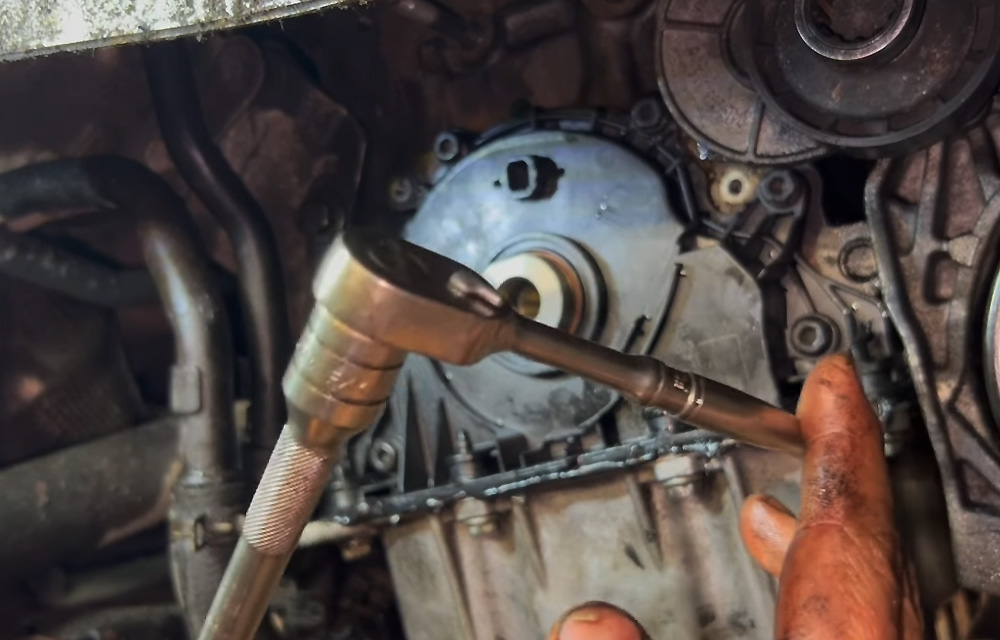
- Remove the four 10mm bolts at the bottom of the housing and the six 10mm bolts around the perimeter.
- Some models may have a foam guard secured with plastic rivets. If present, remove the foam guard for better access.
- Carefully pry the housing away from the engine block.
- Be gentle to avoid damaging the aluminum surface.
- Ensure no debris falls into the sump during this step.
Step 3: Cleaning the Mounting Surface
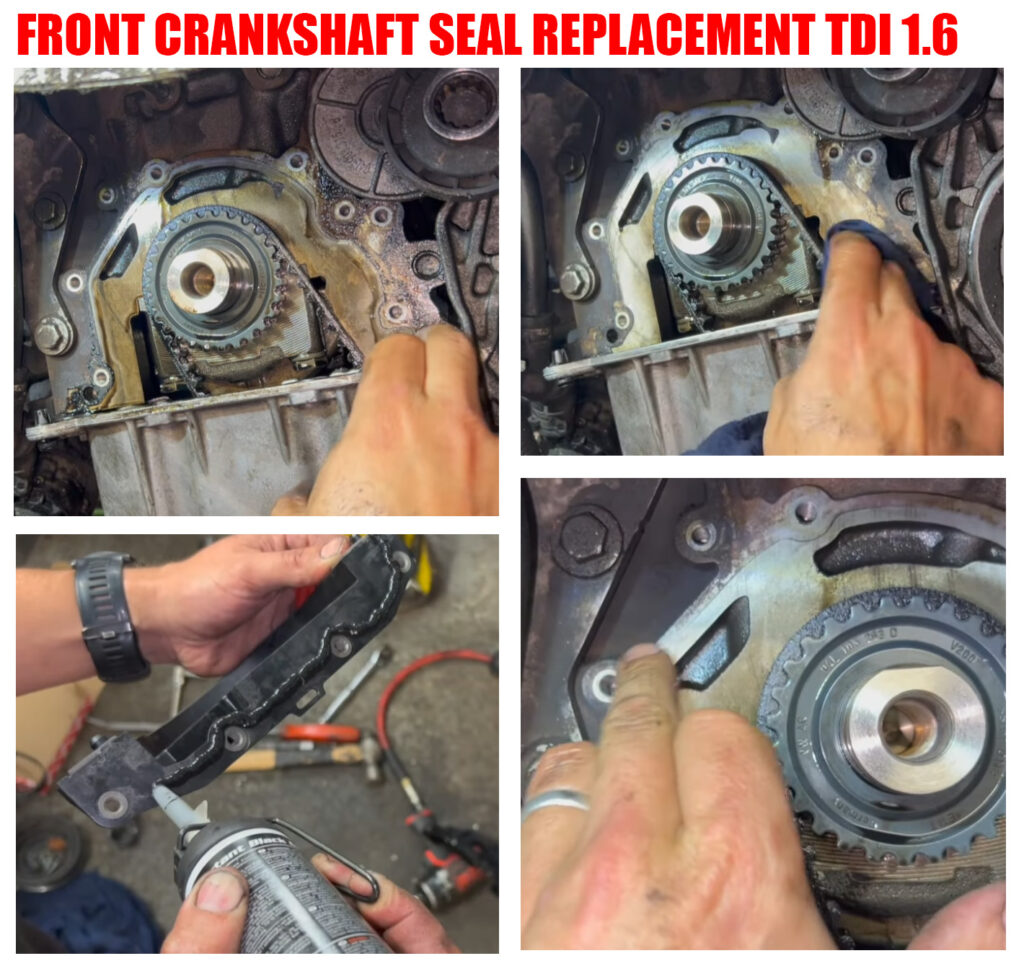
- Thoroughly clean the sealing surface on the engine block.
- Use a razor blade or gasket scraper to remove any old sealant, especially in the corners where leaks are most likely to occur.
- Ensure all remnants of oil and debris are removed to guarantee a proper seal when the new housing is installed.
Step 4: Installing the New Crankshaft Seal and Housing
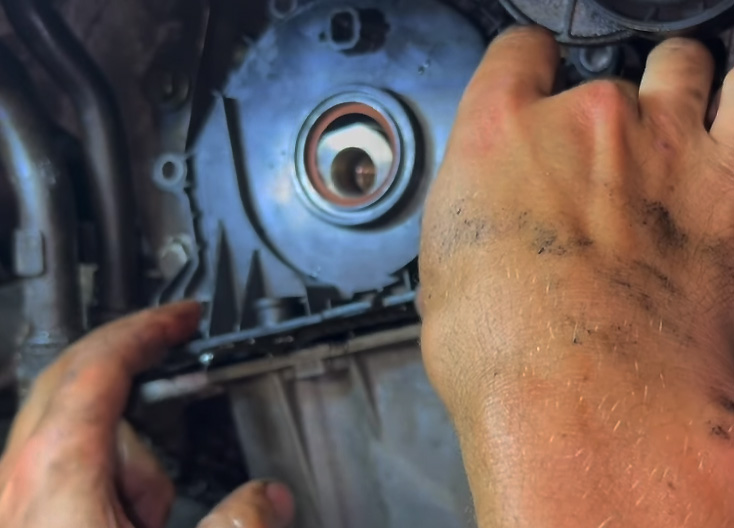
- Apply a thin, even layer of silicone sealant to the bottom edge of the new housing.
- Avoid overapplying to prevent excess sealant from squeezing into the engine.
- Align the new housing with the crankshaft and secure it in place with the bolts removed earlier.
- Tighten the bolts evenly to avoid warping the housing.
- Follow the manufacturer’s torque specifications for the bolts.
Step 5: Reassembling the Pulley
- Align the pulley with the flat section of the crankshaft and slide it into position.
- Secure the pulley with the center bolt.
- If using a torque wrench, refer to the specified torque value for this bolt.
- Avoid tightening with the timing tool in place to prevent damage to the plastic locator.
Step 6: Final Checks and Reassembly
- Inspect the area for any misalignments or leaks.
- Reinstall the timing belt, following the correct alignment and tensioning procedures.
- Verify the engine timing and ensure all components are secure.
Tips and Warnings
- Always use high-quality parts and tools to ensure the integrity of your repair.
- Take extra care to clean all mating surfaces thoroughly before applying the new seal.
- Avoid dropping any debris or tools into the sump while working.
By following these steps, you’ll ensure a successful replacement of the front crankshaft seal, resolving oil leaks and maintaining the engine’s efficiency.
If you found this guide helpful, don’t forget to subscribe to DIY Newkidscar for more detailed automotive repair instructions.
The cost of replacing a front crankshaft seal on a Volkswagen in the USA
The cost of replacing a front crankshaft seal on a Volkswagen in the USA varies depending on the model and labor involved. For example:
- Volkswagen Jetta: The average cost is approximately $168, with parts around $14 and labor about $154.
- Volkswagen Tiguan: The average cost is around $840, with parts at $14 and labor approximately $826.
These estimates can vary based on the specific model year, labor rates, and regional differences. It’s advisable to consult with local mechanics or dealerships for precise quotes tailored to your vehicle’s specifications.
Additionally, some owners have reported quotes ranging from $400 to over $2,000, depending on the complexity of the job and whether additional components, such as the flange, need replacement.
Club Touareg
Given the variability in costs, obtaining multiple quotes from reputable service providers is recommended to ensure a fair price for the replacement.