Learn all about car anatomy, engine construction, transmission, steering, and the car body. There are answers to the questions: How a car works? How do engines work? What is the transmission? How do the steering and braking systems work?
Car Parts
A vehicle consists of several main parts: the engine, the chassis , the car body, the transmission and the electrics.
Let`s study the main units and components of a car:
Car body
The car body is the main and most expensive part of a car. It can be a carrying structure or one of its structural elements.
Car Engine
The engine is the heart of a car. An energy source without a car moving can`t be real. The engine consists of two mechanisms and five systems:
Mechanisms of the engine:
1) Crank mechanism construction
2) Valve mechanism construction
Engine systems:
4) Engine Ignition system;
5) Engine Starting System.
The chassis combines transmission, running gear, and vehicle steering mechanisms.
Car Transmission
The transmission transmits the moment of torsion from the crankshaft to the drive wheels, changing its size and direction.
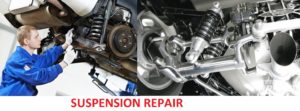
Car Suspension
Running gear consists of the frame that contains the car body and all car mechanisms, the suspension (spring and shock absorber), the rear and front axles, and the wheels.
Car Steering Systems
Vehicle steering mechanisms include the steering system, which changes the direction of the vehicle`s movement, and the brake system, which provides deceleration and complete stopping of the vehicle.
«A Vehicle is a machine that transports people or cargo».
Vehicle anatomy is as interesting as human anatomy. The engine is the heart of the car. Chassis are legs. Transmission — is the osteo-muscular system. A Car`s body is like a human body. As a man needs organs as a car needs units, mechanisms, systems, and parts.
Car Repair School
In order to explore how trucks and cars work, you must consistently study the materials in the vehicle anatomy book. The schema materials of the website «Vehicle Anatomy» help you to study it. So it would be nice if you study the schematic material in the following sequence:
2) Vehicle construction (the first step is to examine the overall structure of the Vehicle, then you can begin to learn the device assemblies and other systems of the car);
3) Vehicle Operation (understanding vehicle anatomy makes it easier to comprehend how a vehicle operates).
It is almost impossible to imagine modern life without a car. Automobiles have improved modern life by providing more convenience to people and increasing efficiency. If you want to be a car driver, you should know car anatomy.
Let us also consider Truck Anatomy. Trucks must comply with European regulatory requirements; their construction is more complex. To fully understand vehicle construction, it is also necessary to study truck anatomy. If you can operate a truck, you can generally operate a passenger car as well.
Vehicle Construction is a website that includes an ultimate guide to how cars work and a free guide to every part of a vehicle. It can help you learn everything about car mechanics from our professional-quality articles.