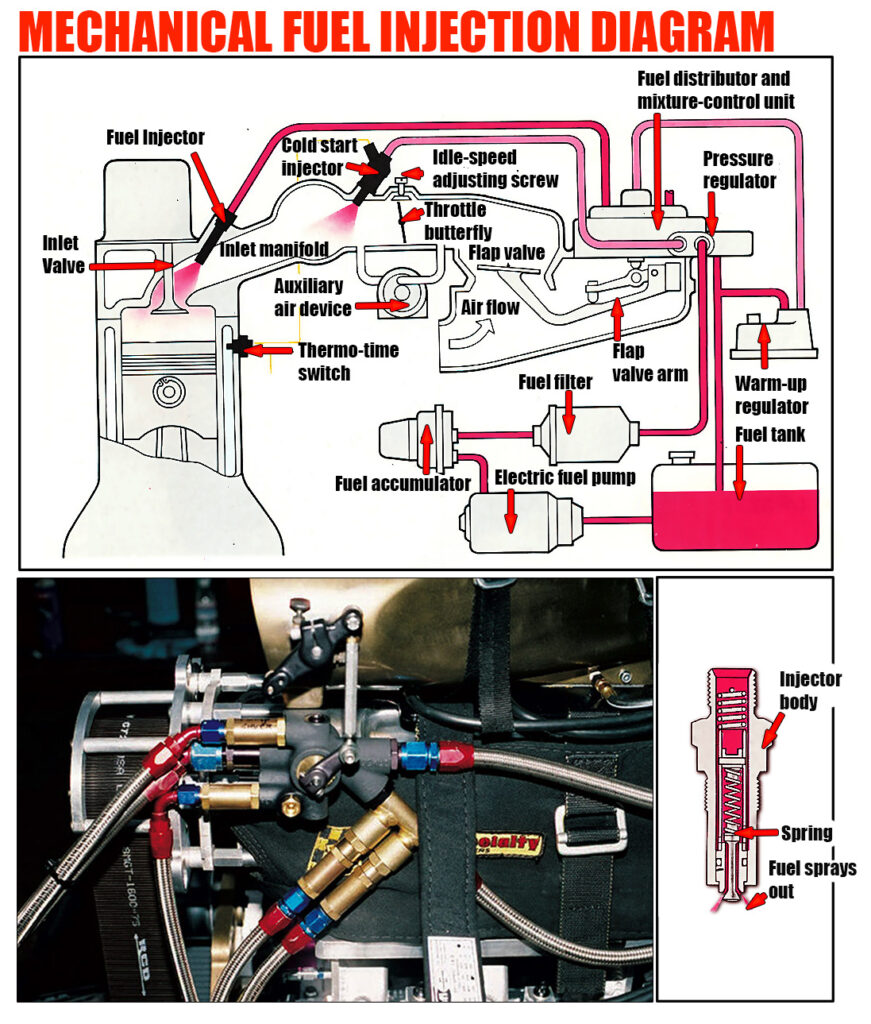
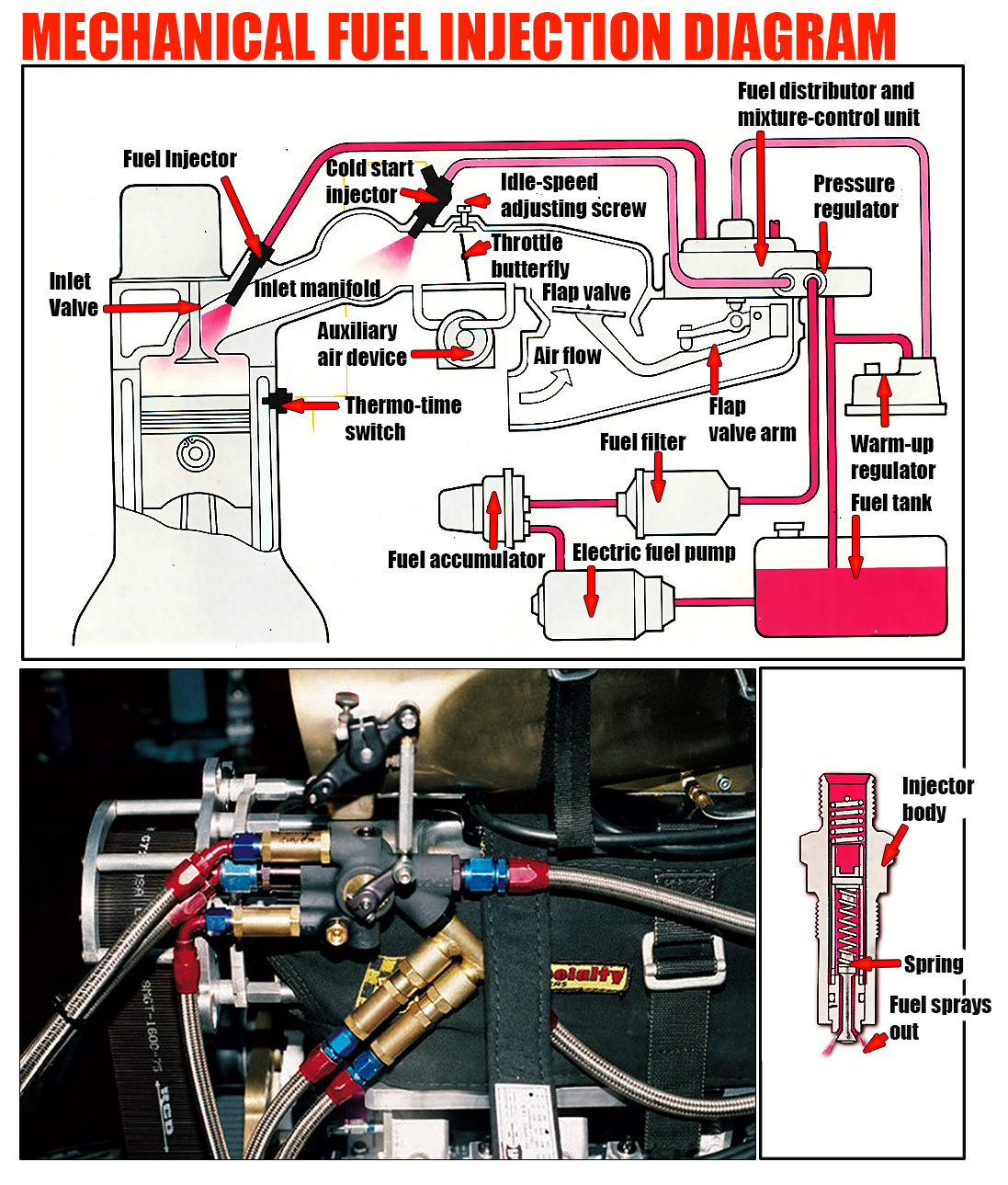
Mechanical fuel injection is a precise and efficient method for delivering fuel to an engine. Among the various systems developed, the Lucas PI (Petrol Injection) system stands out as a widely used and effective technology. This article provides a detailed overview of the mechanical fuel injection process, focusing on the Lucas PI system, and explains the key components and their functions as depicted in a typical mechanical fuel injection diagram.
Fuel Distribution and Metering
After leaving the fuel accumulator, the fuel passes through a paper element filter that removes any impurities before entering the fuel-metering control unit, also known as the fuel distributor. This unit, driven by the engine’s camshaft, is responsible for distributing the correct amount of fuel to each cylinder at the appropriate time. The timing and quantity of fuel injection are critical to maintaining the ideal air-fuel mixture, which directly influences engine performance and efficiency.
Airflow Control and Fuel Injection
The Lucas PI system uses a flap valve located in the engine’s air intake to control the amount of fuel delivered to the injectors. As the engine’s throttle is opened, the increased “suck” from the cylinders causes the flap valve to rise. This movement adjusts the position of a shuttle valve within the metering control unit, allowing more fuel to be injected into the cylinders. The system is designed to automatically balance the fuel flow with the amount of air entering the engine, ensuring a consistent and optimal fuel/air mixture.
Each fuel injector, connected to the metering unit, is equipped with a spring-loaded valve. This valve remains closed due to the pressure of the spring and only opens when fuel is injected at the correct pressure, allowing the fuel to squirt into the inlet port of the cylinder head. This precise control over fuel injection timing and quantity is what makes mechanical fuel injection systems like the Lucas PI so effective.
Cold Starting and Fuel Enrichment
Cold starting presents a unique challenge for mechanical fuel injection systems, as they cannot simply block off part of the airflow to enrich the mixture, as is done with carburetors. In the Lucas PI system, this is addressed with a manual control on the dashboard, resembling a choke knob, or in later models, a microprocessor-controlled cold-start injector. This injector provides an extra burst of fuel during startup, creating a richer mixture that helps the engine start more easily in cold conditions. Once the engine reaches a certain operating temperature, a thermoswitch automatically deactivates the cold-start injector, returning the system to its standard operating mode.
Mechanical fuel injection diagrams, particularly those illustrating the Lucas PI system, offer valuable insights into the complex interactions between fuel, air, and engine components. Understanding these diagrams is crucial for anyone involved in the maintenance, restoration, or performance tuning of classic vehicles equipped with this technology. The Lucas PI system, with its precise fuel metering and robust mechanical design, remains a testament to the engineering prowess of its era, ensuring that high-performance engines could deliver the power and responsiveness demanded by drivers.