
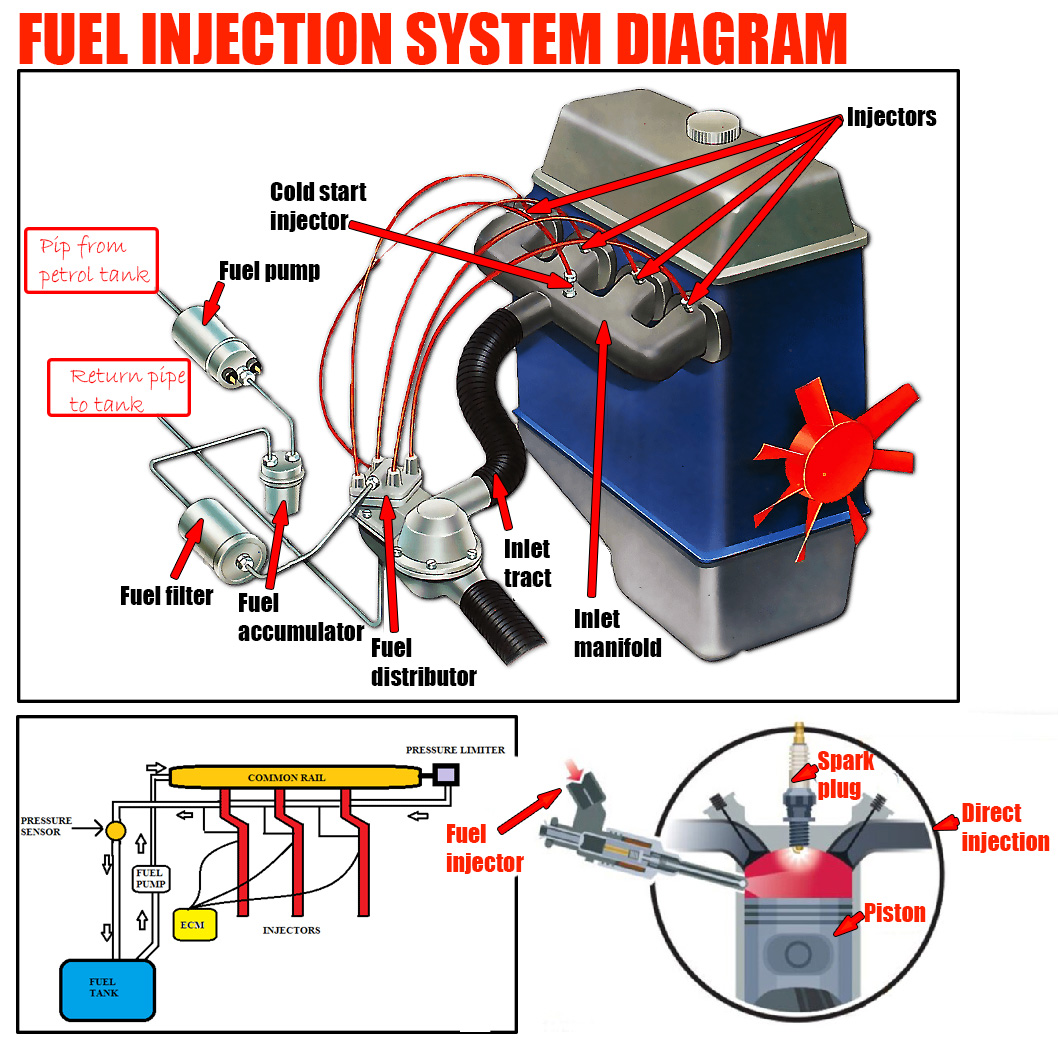
The fuel injection system plays a critical role in the modern internal combustion engine, ensuring that the engine receives the precise fuel/air mixture needed for optimal performance. This article explores the design, function, and advantages of fuel injection systems, particularly in petrol-engined vehicles, and explains how they have largely replaced traditional carburetors due to their efficiency and precision.
The Basics of Fuel Injection Systems
In a fuel injection system, petrol is delivered to the engine in a highly controlled manner. The process begins with a fuel pump that sends petrol from the fuel tank to the engine bay. Once in the engine bay, the petrol is injected into the inlet manifold or directly into the cylinder head by an injector.
There are two primary types of fuel injection in petrol engines:
- Indirect Fuel Injection: This is the most common type in petrol engines. Here, the fuel is injected into the inlet manifold, just before the intake valve. The air and fuel mix in the manifold before entering the combustion chamber.
- Direct Fuel Injection: In this type, fuel is injected directly into the combustion chamber, allowing for more precise control of the fuel/air mixture. This system is more efficient and is commonly found in modern, high-performance engines.
How the Fuel Injection System Works
The operation of the fuel injection system involves several key components and processes:

- Fuel Pump: The fuel pump is responsible for delivering petrol from the fuel tank to the engine. It generates the necessary pressure to ensure that the fuel reaches the injectors with enough force for proper atomization.
- Fuel Injectors: The injectors are electrically controlled valves that spray fuel into the engine’s air stream. Each injector delivers a precise amount of fuel in short bursts, timed with the engine’s intake strokes. In some systems, there is an injector for each cylinder, while in others, one or two injectors serve multiple cylinders.
- Inlet Manifold: In indirect fuel injection systems, the fuel is mixed with air in the inlet manifold. The manifold distributes the air/fuel mixture to each cylinder in the engine. The design of the manifold and the timing of the injection are crucial for achieving optimal performance.
- Engine Control Unit (ECU): The ECU is the brain of the fuel injection system. It constantly monitors various engine parameters, such as engine speed, temperature, and load, and adjusts the timing and quantity of fuel injected to ensure the engine runs efficiently and meets emission standards.
Advantages of Fuel Injection Systems
Fuel injection systems offer several advantages over traditional carburetors, which have made them the preferred choice in modern engines:
- Precise Fuel Delivery: Fuel injection systems deliver the exact amount of fuel needed for each cylinder, ensuring a more consistent and efficient fuel/air mixture. This precision results in better engine performance, including smoother acceleration and more power.
- Improved Fuel Efficiency: By providing the correct amount of fuel at the right time, fuel injection systems help engines burn fuel more efficiently. This leads to better fuel economy and lower operating costs for the vehicle owner.
- Lower Emissions: Fuel injection systems are designed to reduce the amount of unburned fuel and other pollutants in the exhaust gases. This makes fuel-injected engines more environmentally friendly compared to carbureted engines, which often produce higher levels of emissions.
- Enhanced Reliability: Fuel injection systems are less prone to the issues that can affect carburetors, such as clogging or tuning problems. This reliability translates into less frequent maintenance and better long-term performance.
Challenges of Carburetors and the Shift to Fuel Injection
Traditional carburetors work by mixing fuel and air before it enters the engine. However, they have several limitations:
- Uneven Mixture Distribution: In a carbureted engine, some cylinders may receive a different fuel/air mixture than others because of the varying distances between the carburetor and the cylinders. This can lead to inefficient combustion and reduced performance.
- Difficult Tuning: Carburetors can be difficult to tune correctly, especially in multi-carburetor setups. They require regular adjustments to maintain optimal performance, which can be cumbersome and time-consuming.
- Less Efficient: Carburetors cannot adjust the fuel/air mixture as precisely as fuel injection systems can. This lack of precision can result in lower fuel efficiency and higher emissions.
Due to these challenges, many vehicles have transitioned to fuel injection systems. Fuel injection not only solves the problems associated with carburetors but also brings additional benefits in terms of performance, fuel economy, and emissions.
The fuel injection system is a key innovation in automotive engineering, providing precise control over the fuel/air mixture delivered to the engine. By replacing the less efficient carburetor, fuel injection systems have improved engine performance, fuel efficiency, and environmental impact. As technology continues to advance, fuel injection systems will likely become even more sophisticated, further enhancing the capabilities of modern engines.