
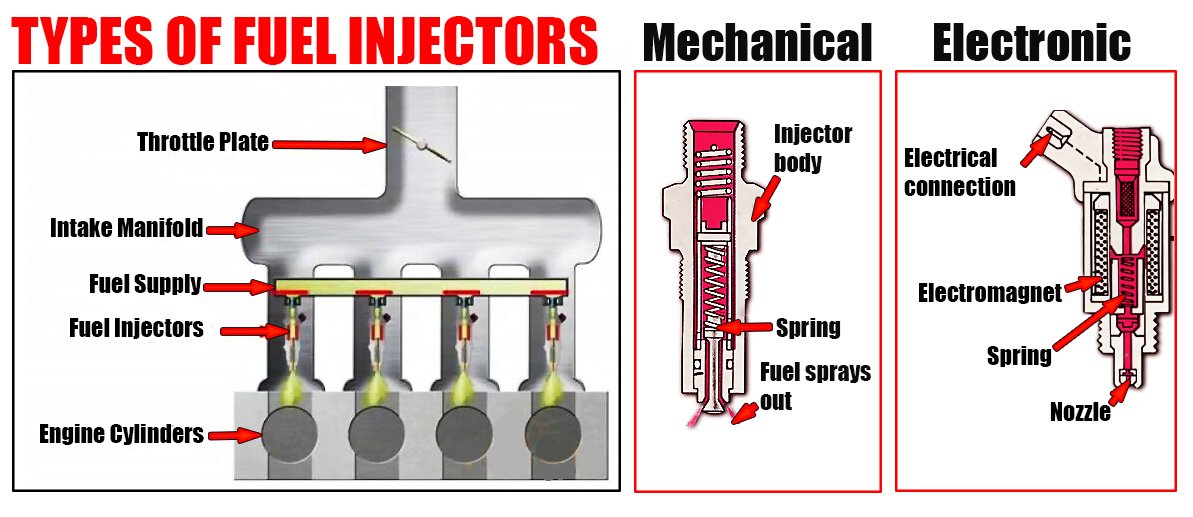
Fuel injectors are components in modern internal combustion engines, responsible for delivering precise amounts of fuel into the engine’s cylinders. The performance, efficiency, and emissions of an engine are heavily influenced by the type and functionality of the fuel injectors used. Broadly, fuel injectors can be categorized into two main types based on the control system: mechanical and electronic. This article explores the key differences between these types and how they operate within their respective systems.
Mechanical Fuel Injectors
Mechanical fuel injectors are an older technology that relies on fuel pressure to operate. In this system, the injector is spring-loaded into the closed position, ensuring that no fuel flows when the engine is off or when fuel pressure is insufficient. When the engine is running, fuel is pumped at high pressure from the fuel pump into the injector. Once the fuel pressure exceeds the preset tension of the spring, the injector opens, allowing fuel to spray into the engine’s intake port or directly into the cylinder.

Key Features of Mechanical Fuel Injectors:
- Spring-Loaded Mechanism: The injector remains closed under normal conditions due to the tension of a spring. Fuel pressure must overcome this tension to open the injector and allow fuel to flow.
- Pressure-Dependent Operation: The amount of fuel injected is directly related to the pressure supplied by the fuel pump. Higher pressure results in more fuel being injected.
- Simple Design: Mechanical injectors have a straightforward design, with fewer electronic components, making them more robust but less precise than their electronic counterparts.
Mechanical fuel injectors are typically found in older vehicles and are commonly associated with mechanical fuel injection systems like the Bosch K-Jetronic or the Lucas PI system. These systems, while effective, are less flexible in managing fuel delivery compared to modern electronic systems.
Electronic Fuel Injectors
Electronic fuel injectors represent a more advanced technology, where the injector operation is controlled by an electronic control unit (ECU). Like mechanical injectors, electronic injectors are also spring-loaded into the closed position. However, instead of relying solely on fuel pressure to open, these injectors use an electromagnet built into the injector body.
When the ECU determines that fuel needs to be injected, it sends an electrical signal to the injector, energizing the electromagnet. This magnetic force overcomes the spring tension, opening the injector and allowing fuel to spray into the engine. The duration of the injector opening, known as the pulse width, is precisely controlled by the ECU, allowing for fine-tuned fuel delivery based on various engine parameters such as load, speed, and temperature.

Key Features of Electronic Fuel Injectors:
- Electromagnetic Control: The injector is opened by an electromagnet, allowing for rapid and precise control of fuel injection timing and quantity.
- ECU Integration: The electronic control unit plays a crucial role in managing the injector’s operation, using inputs from various sensors to optimize fuel delivery for performance, efficiency, and emissions.
- Precision and Flexibility: Electronic injectors offer greater precision in fuel delivery, making them ideal for modern engines that require exact control over air-fuel ratios.
Electronic fuel injectors are standard in most modern vehicles, where they contribute to improved fuel efficiency, lower emissions, and better overall engine performance. These injectors are part of more sophisticated fuel injection systems, such as multi-point fuel injection (MPFI), direct fuel injection (DFI), and common rail systems.
Comparison and Applications
While both mechanical and electronic fuel injectors serve the same fundamental purpose—delivering fuel to the engine—their operating principles and applications differ significantly.
- Mechanical Injectors: Best suited for simpler, older engines where durability and straightforward operation are priorities. They are less adaptable to changes in engine conditions and are gradually being phased out in favor of more precise electronic systems.
- Electronic Injectors: Offer superior control and adaptability, making them the preferred choice for modern engines that demand precise fuel management. Their integration with ECUs allows for real-time adjustments based on engine conditions, resulting in better fuel economy, reduced emissions, and enhanced performance.
Understanding the differences between mechanical and electronic fuel injectors is crucial for anyone involved in automotive engineering, maintenance, or performance tuning. Mechanical injectors represent a simpler, more rugged approach, while electronic injectors offer the precision and flexibility required by contemporary engines. As technology continues to evolve, electronic fuel injection systems are likely to dominate, driving advancements in engine efficiency and environmental compliance.