
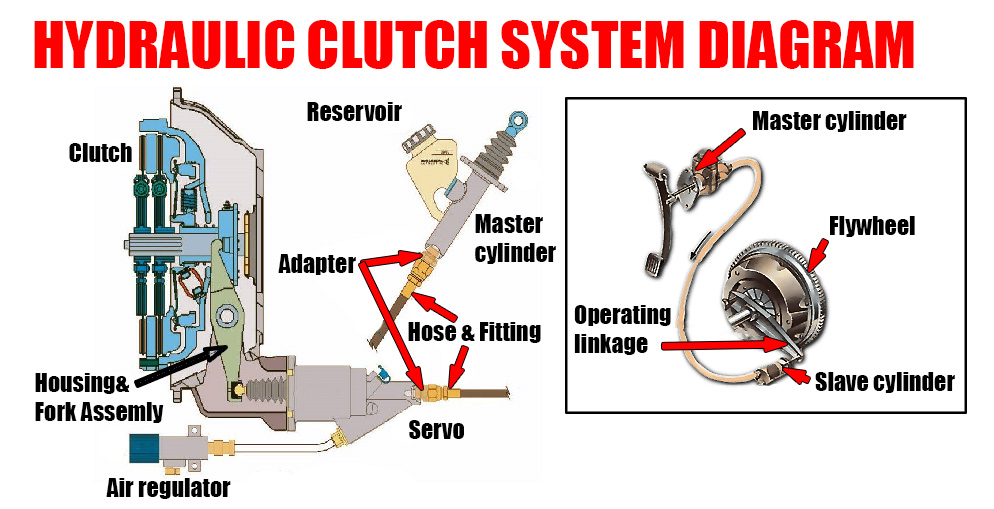
The hydraulic clutch system is a mechanism that plays a crucial role in the operation of modern vehicles. By understanding its components and working principles, we can appreciate the efficiency and reliability it brings to automotive technology. This article delves into the intricate workings of the hydraulic clutch system, providing a detailed analysis of its components, engagement, and disengagement processes, all presented with the rigor expected in technical discourse.
Components of the Hydraulic Clutch System
The hydraulic clutch system comprises several key components, each serving a specific function to ensure smooth and reliable operation. These components include:
- Clutch Pedal: The driver-operated interface that initiates the engagement and disengagement processes.
- Master Cylinder: Converts the mechanical force applied by the clutch pedal into hydraulic pressure.
- Hydraulic Lines and Hoses: Transport the hydraulic fluid from the master cylinder to the slave cylinder.
- Slave Cylinder: Converts the hydraulic pressure back into mechanical force to operate the clutch fork.
- Clutch Fork: Transfers the force from the slave cylinder to the pressure plate.
- Pressure Plate: Applies pressure to the clutch disc, engaging or disengaging the clutch from the flywheel.
- Clutch Disc: The friction interface between the pressure plate and the flywheel.
- Flywheel: Connects to the engine and provides a rotating mass to maintain engine momentum.
The Working Principle of a Hydraulic Clutch System
The hydraulic clutch system operates based on the principles of hydraulics, similar to a brake system. Its operation can be divided into two primary phases: engagement and disengagement.

Engagement Process
The engagement process begins when the driver presses the clutch pedal. This action pushes a rod in the master cylinder, generating hydraulic pressure by forcing fluid through the hydraulic lines. The pressurized fluid travels to the slave cylinder, which then pushes the clutch fork. The clutch fork moves the pressure plate, causing it to press against the clutch disc. The clutch disc, in turn, makes contact with the flywheel, thereby engaging the engine with the transmission. This engagement allows the engine’s power to be transmitted to the wheels, enabling the vehicle to move.
Disengagement Process
The disengagement process is initiated when the driver releases the clutch pedal. As the pedal is released, the hydraulic pressure decreases, causing the slave cylinder to retract. This retraction moves the clutch fork backward, relieving the pressure on the clutch disc. The clutch disc then separates from the flywheel, breaking the connection between the engine and the transmission. This disengagement process effectively isolates the engine’s rotational force from the wheels, allowing the driver to change gears or bring the vehicle to a stop without stalling the engine.
Advantages of the Hydraulic Clutch System
The hydraulic clutch system offers several advantages over traditional mechanical clutch systems. Unlike mechanical clutches, which rely on cables that can stretch or break over time, hydraulic systems maintain consistent pedal feel and engagement throughout the clutch’s lifespan. Additionally, hydraulic clutches are self-adjusting, meaning they compensate for wear on the clutch disc, ensuring consistent performance. However, it’s important to note that hydraulic systems can be susceptible to issues such as fluid leaks and air in the lines, which can prevent the clutch from fully disengaging.
The hydraulic clutch system is a component in modern vehicles, providing reliable and efficient control over the engagement and disengagement of the engine and transmission. By understanding its components and working principles, we can appreciate the technological advancements that make driving more seamless and responsive. The hydraulic clutch system not only enhances the driving experience but also contributes to the overall durability and performance of the vehicle.