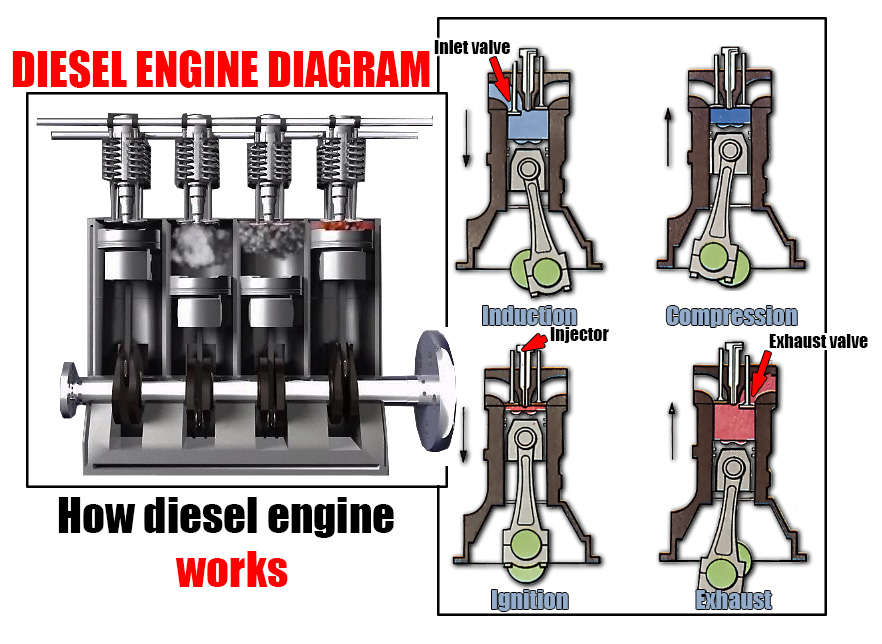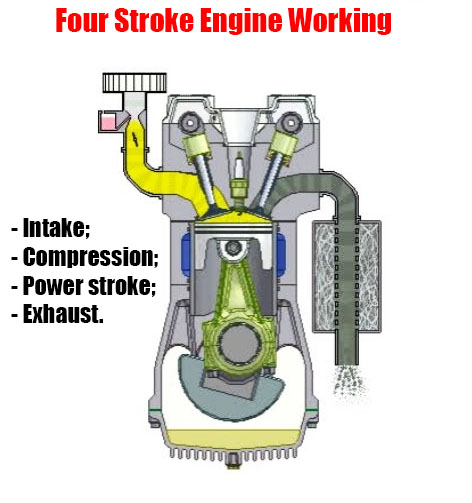
A diesel engine operates on the four-stroke cycle, similar to a petrol engine, but with significant differences in fuel ignition and power regulation...
Category - Engine Construction
Learn an Engine Construction | Learn all about engine: engine construction, engine mechanism, engine systems, how engine works
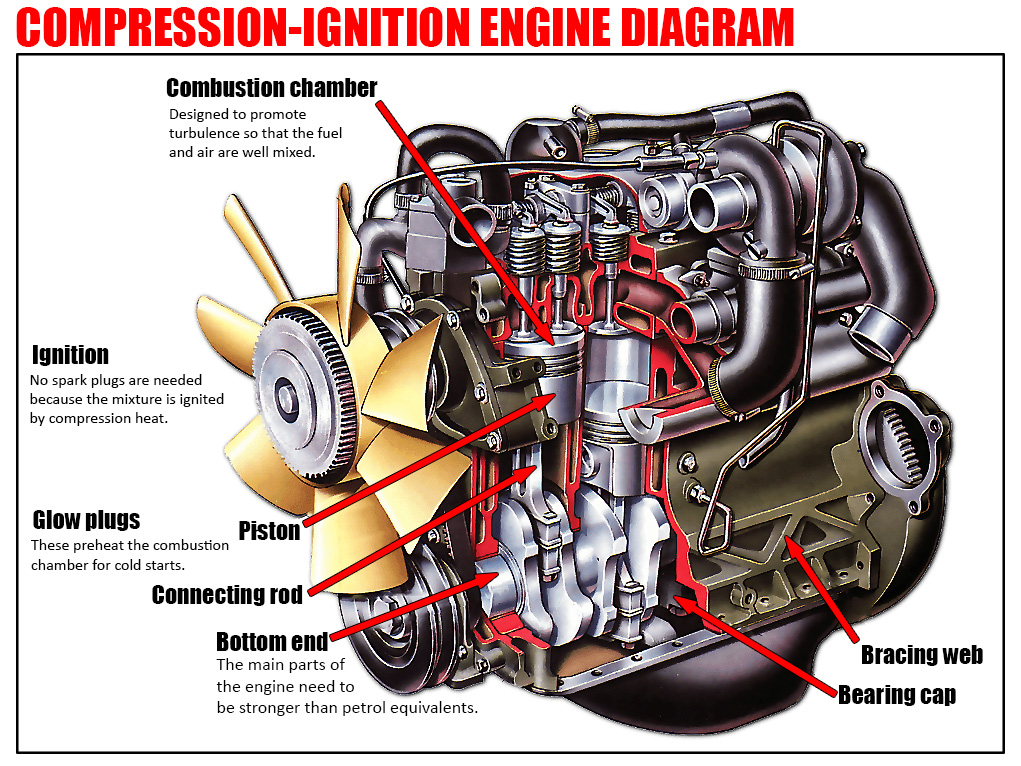
Compression-ignition engines, commonly known as diesel engines, are a cornerstone of automotive technology, particularly in vehicles where efficiency and...
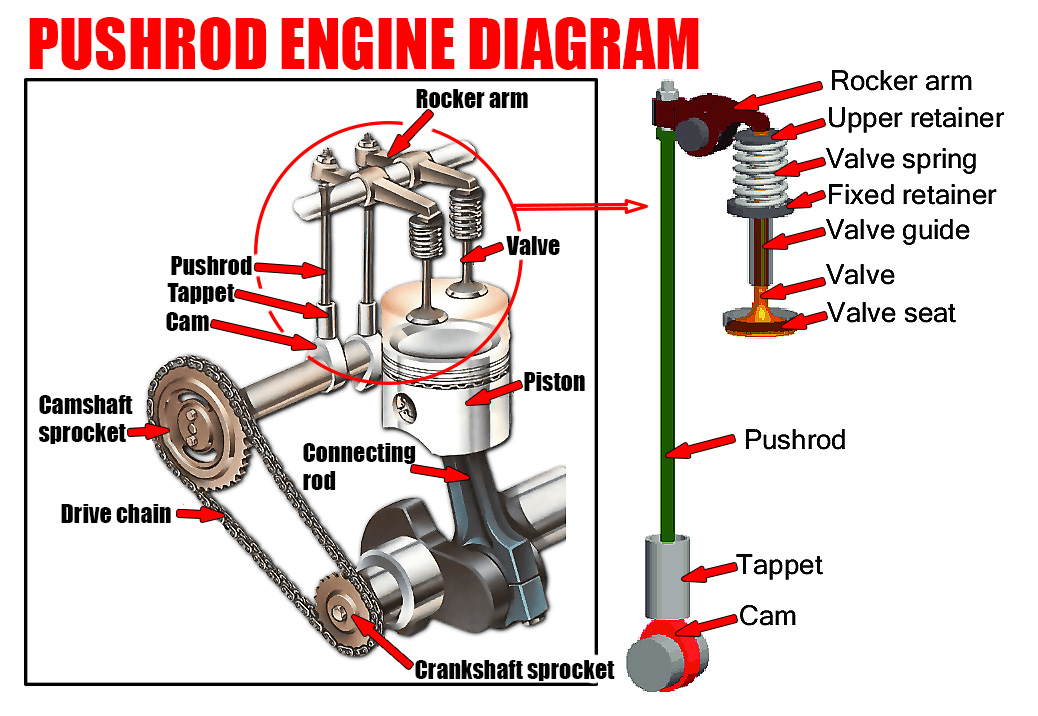
The pushrod engine, also known as the overhead valve (OHV) engine, is a classic internal combustion engine configuration that has been widely used in...
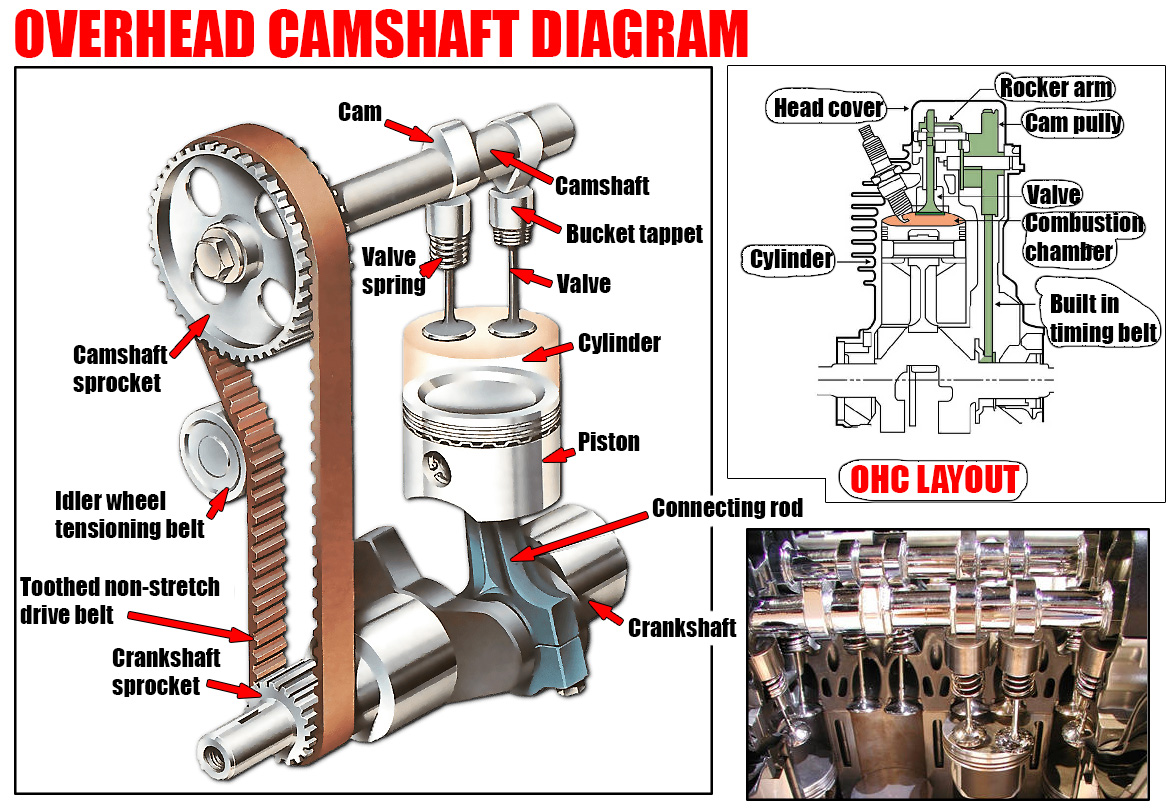
The overhead camshaft (OHC) engine is a widely used configuration in modern internal combustion engines, known for its efficiency and simplicity in valve...
In an engine, the correct timing and position of the valves are crucial to ensure efficient combustion and optimal performance. The camshaft plays a key role...
V-Engines V-engines, known for their compact design, are commonly fitted in various cars, particularly those with eight or twelve cylinders, and sometimes in...
Some engines feature horizontally opposed cylinders, which are an extension of the V-engine, with the angle widened to 180 degrees. This design offers several...
A car valve diagram shows the role of a valve in regulating the flow of air and fuel into the combustion chambers and expelling exhaust gases. The diagram...
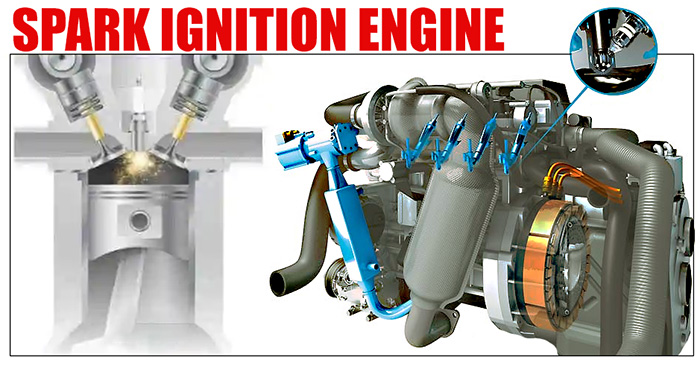
The spark ignition engine, also known as the petrol engine, operates the principle of combustion of the air-fuel mixture ignited by a spark from a spark plug...
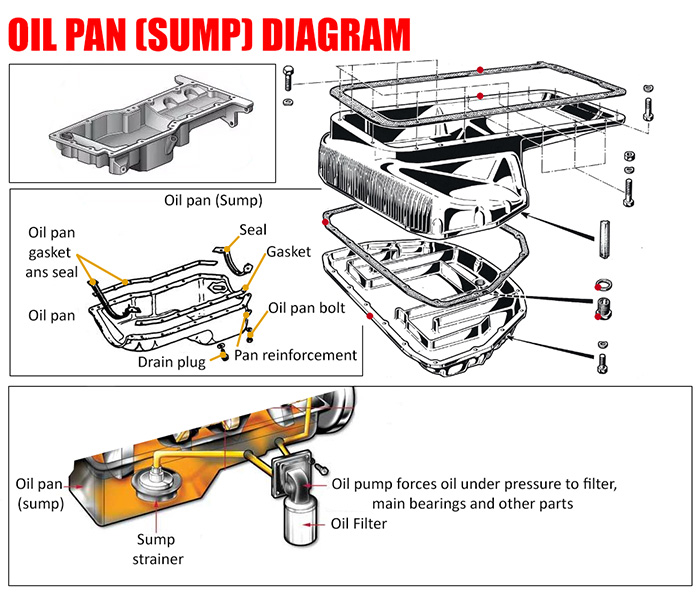
A sump is an oil reservoir (low space) bolted to the bottom of the engine. The oil from the oil pan moves to the engine`s parts for lubricating, cleaning, and...
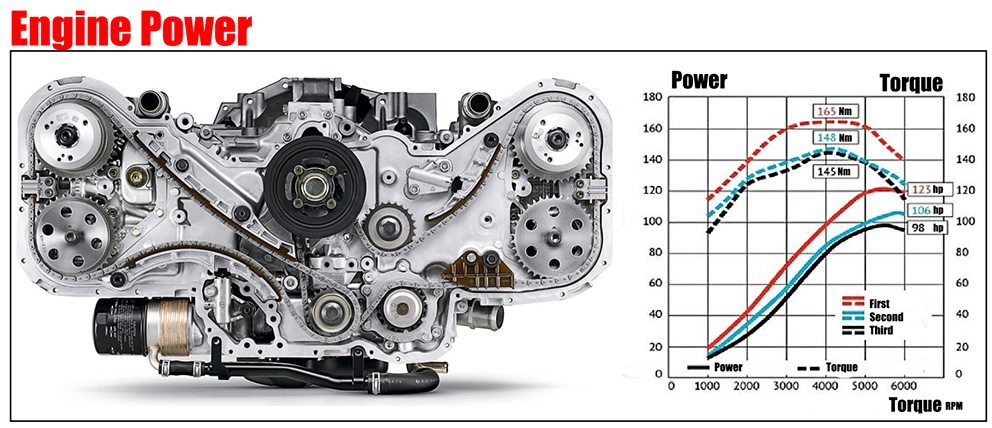
When it comes to automobiles, one of the key factors that determine their performance is the engine power. Engine power is the ability of an engine to produce...
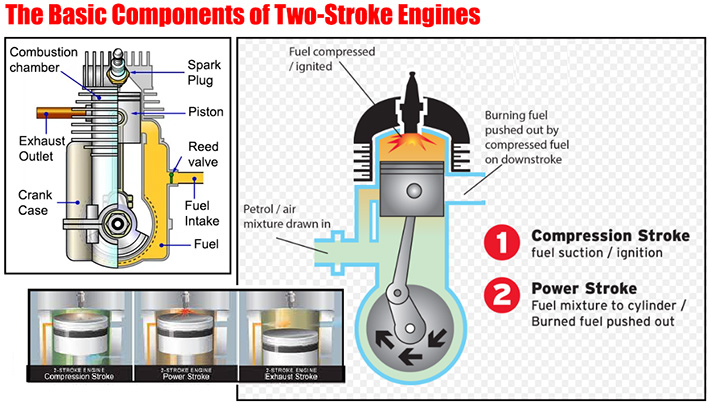
Two-stroke engines are compact, lightweight, and incredibly efficient, making them a popular choice for everything from lawn mowers to motorcycles to chainsaws...
Before buying oil, you should consider the following: Vehicle type: Different vehicles have different requirements when it comes to oil. Check your...
Each of the engines sometimes works with changing loading. It is a reason why unbalance ensures between power and loads, and as a result, the mechanism wears...
The efficiency of power engine depends from next parameters: crankshaft speed, compression ratio, working volume of the engine and amount of cylinders. It is...
If you consider the stroke usually each stroke beginning and finishing in one of the dead centres. Intake Stroke The first stroke is intake. When turning the...
Internal Combustion Engine that are used in cars are made of thousands of components, but each of which is part of engine system or engine mechanism. ...
The Most Powerful Engines are the engines which have short strokes and big bores. The reason for this is worth thinking about. In order to achieve maximum...
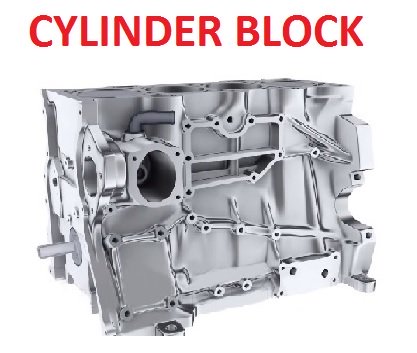
The cylinder block is a fixed, integral part of the crank mechanism (hereinafter referred to as KM), which combines the engine cylinders. It is made by casting...
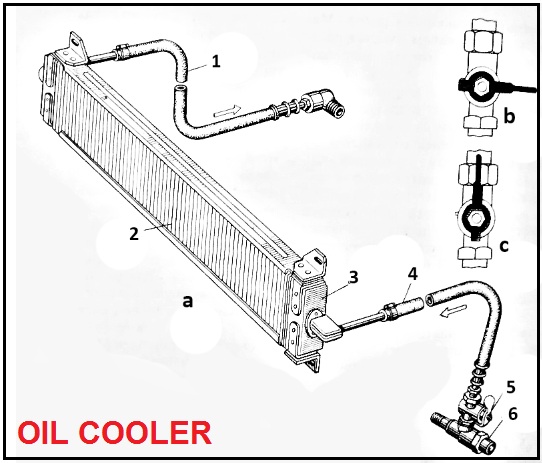
The oil cooler is designed to maintain the oil temperature within the required range. It is mainly used on trucks. Oil cooler construction is not very...
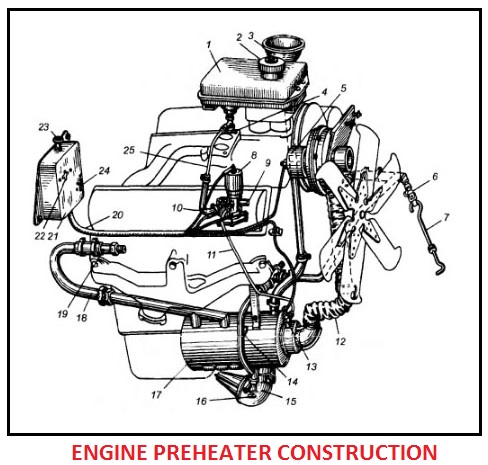
The pre-heater serves to preheat the car engine before starting at low ambient temperatures and helps to reduce the wear of cylinders and pistons. The set of...
The inlet manifold serves to supply the combustible mixture from the carburetor to the engine cylinders. They are usually cast from aluminum alloys. Inlet...
Depending on the vehicle’s driving mode, the combustion process in spark ignition engines may be disrupted. Violation of the combustion process can be called...
The flywheel housing (carter) is made of aluminum alloy and bolted to the rear end of the cylinder block through a special paronite gasket made of paronite. In...
For those who are interested in the car construction, and those who do not want to look stupid in the eyes of their friends motorists, we will consider the...
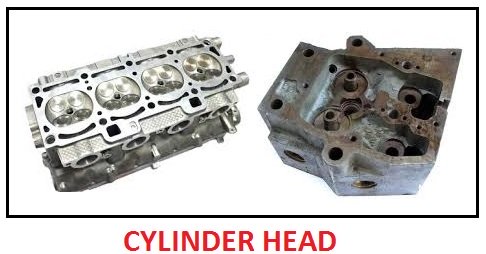
The purpose of the cylinder head In internal combustion engines, the cylinder head (cylinder head), (often referred to simply as the head) is mounted and...
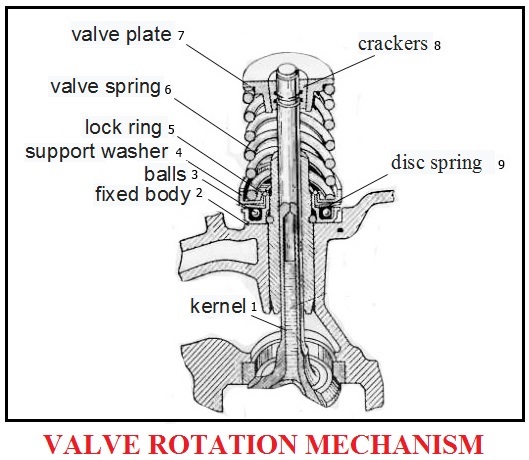
Valve rotation mechanism, device and purpose of the valve rotation mechanism On some engines, a valve rotation mechanism is used, whose task is to turn the...
Different Oil filters (primary oil filter and secondary filter) are installed in the modern engine for the oil clean and defending friction surfaces from...
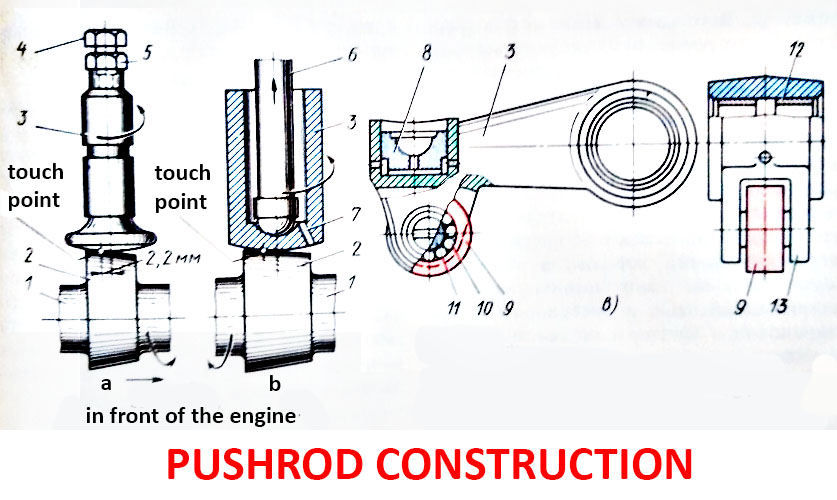
The pushrod transfers the forces from camshaft to the valve. It is made of steel or cast iron. The working surface of the pushrod is subjected to hardening and...
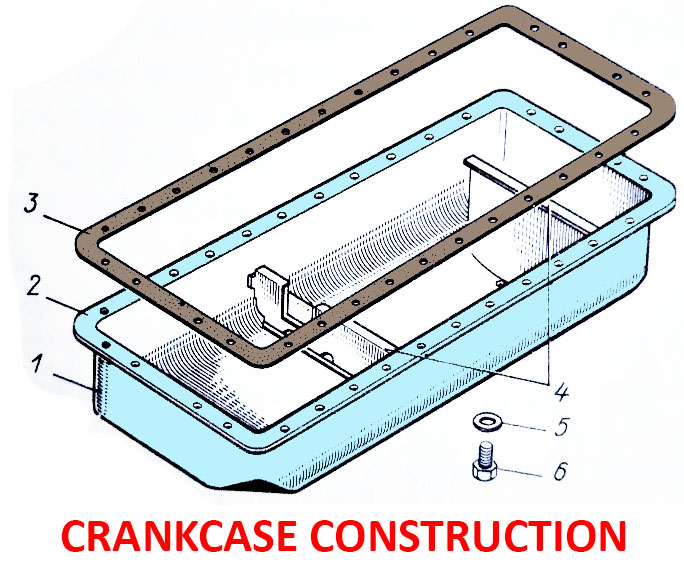
The engine crankcase consists of two parts: the upper and lower. The upper part of the crankcase is cast integrally with the cylinder block. Crankshaft...
Thermostat is a device that automatically supports need temperature in engine cooling system. Thermostat allows you to quickly warm up a cold engine at startup...
Car’s water pump is creating forced cooling fluid circulation in the cooling system of the engine. Some water pumps are structurally combine with fans...
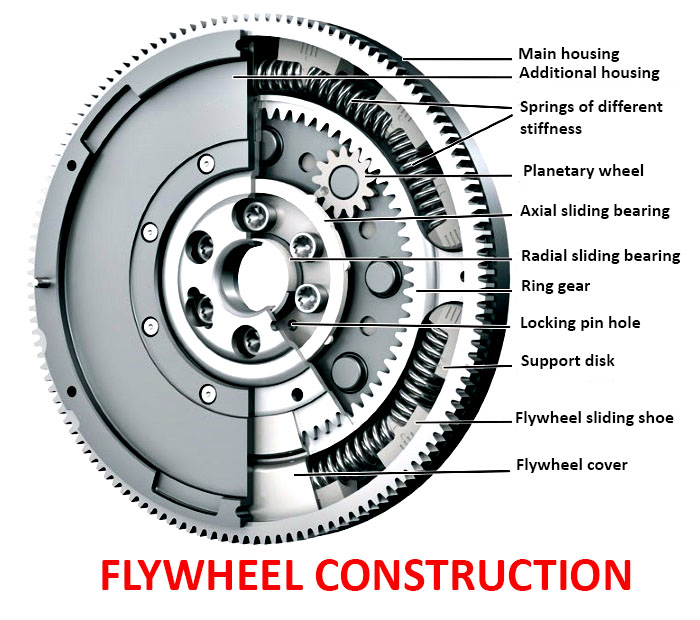
A flywheel is a special mechanical device design to efficiently store kinetic energy by the working stroke. The engine flywheel serves to accumulate energy...
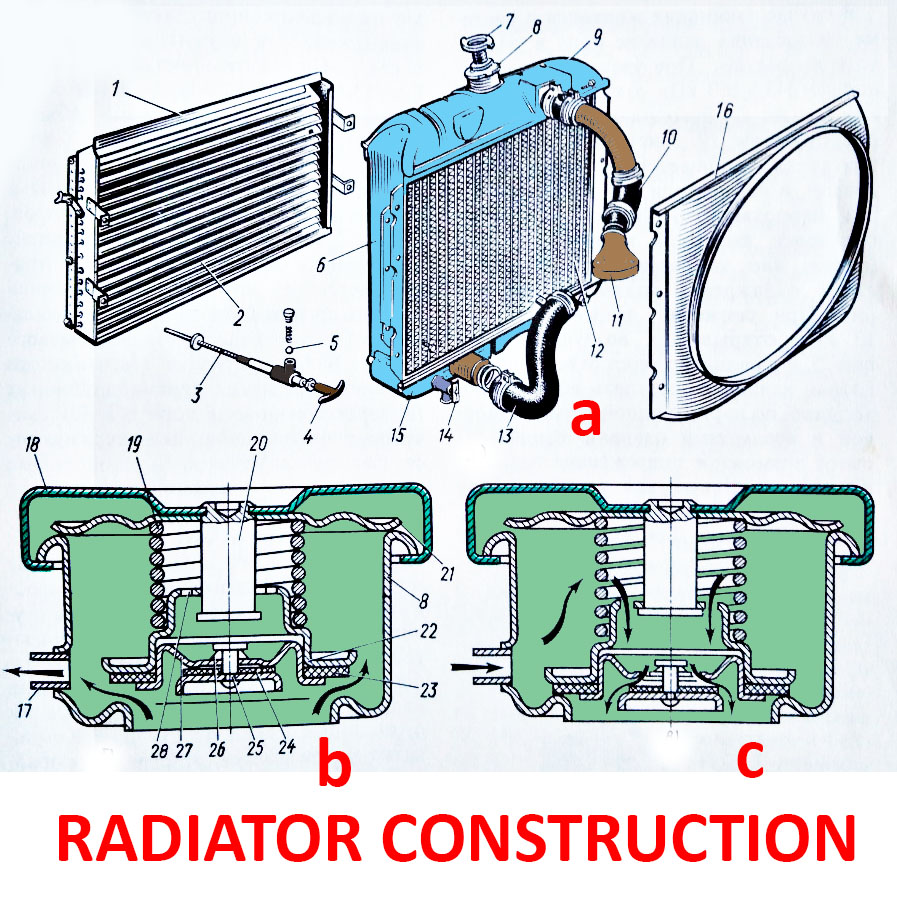
Radiator is a heat exchanger through which heat from the engine liquid is transferred to the air. The radiator consists of upper tank 9 and lower tank 15...
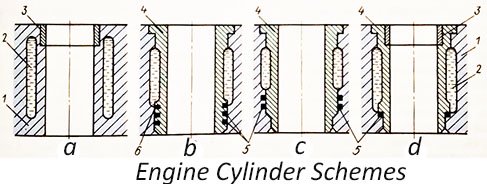
Cylinder Liner Construction The cylinder of the internal combustion engine is the working chamber of the volumetric displacement. During engine operation, the...
The main engine modes of loading are engine start, idle and light loads, medium loads, full loads and sudden transitions from small to large loads. By the...
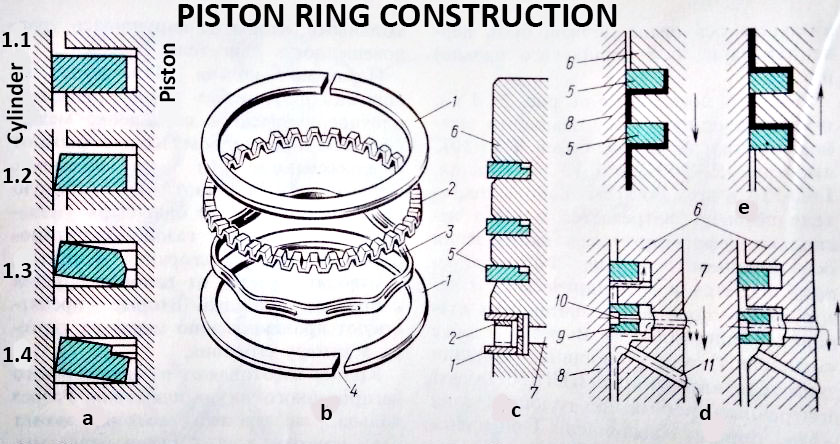
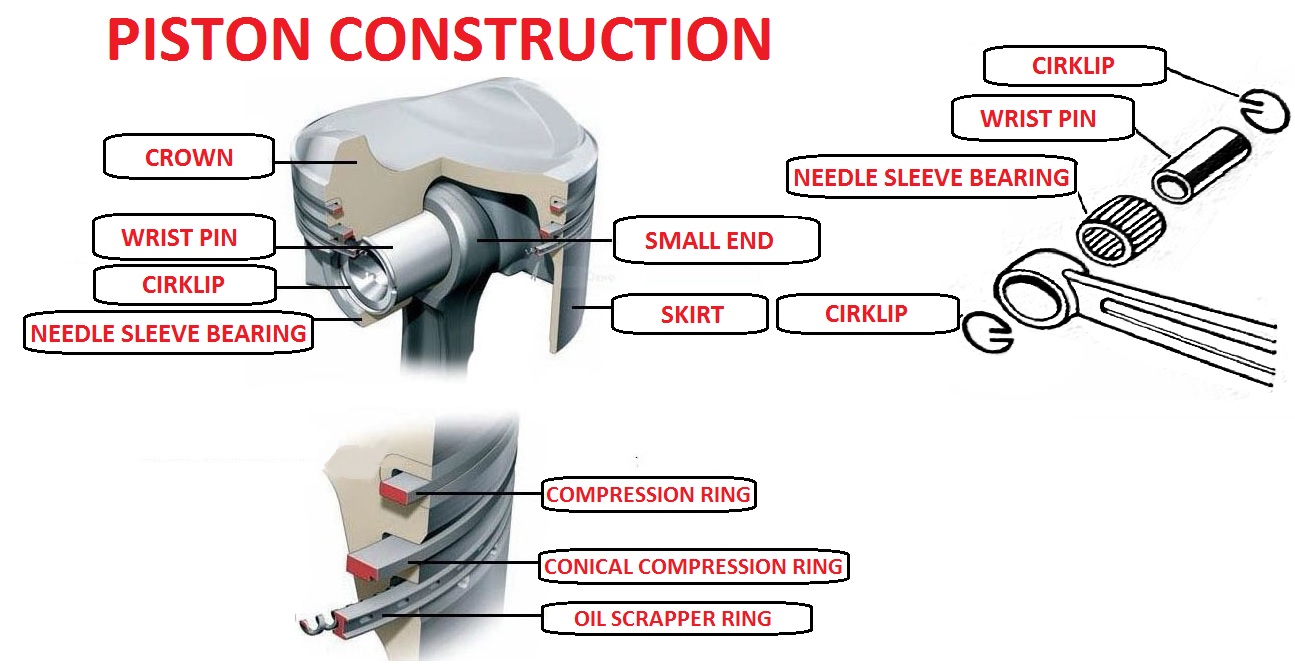
Piston ring construction Piston rings are worn on the piston create a tightly movable connection between the piston and the cylinder. There are some kinds of...
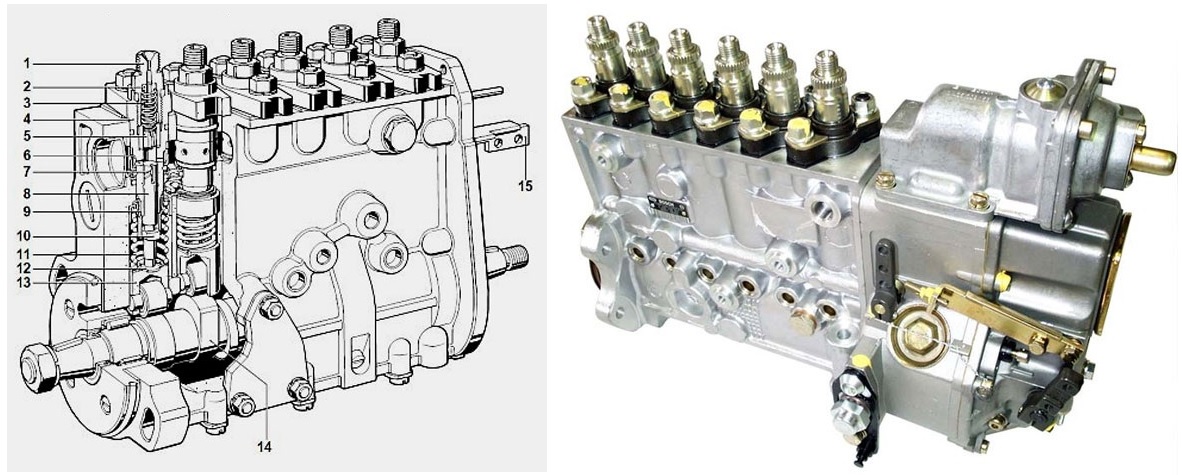
High pressure fuel pump (HPFP) construction: types of fuel pumps, how it works The high-pressure fuel pump has the abbreviation (HPFP) performs the following...
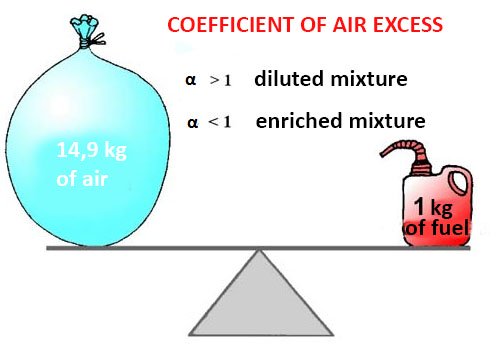
Combustible mixture To form combustible mixture are using fuel and air. These components are part compound of combustible mixture so they must to be cleaning...
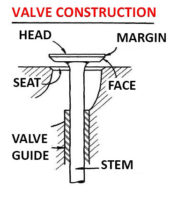
Engine Valves The main purpose of engine valves is opening and closing intake and exhaust holes. When intake valve is opening the fuel air mixture enters to...
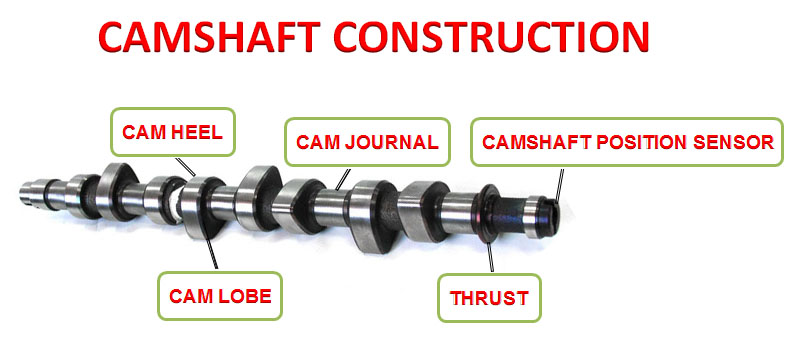
Camshaft in car engine The camshaft is a shaft with a series of cam lobes along its centerline in various positions. The camshaft and crankshaft rotate at...
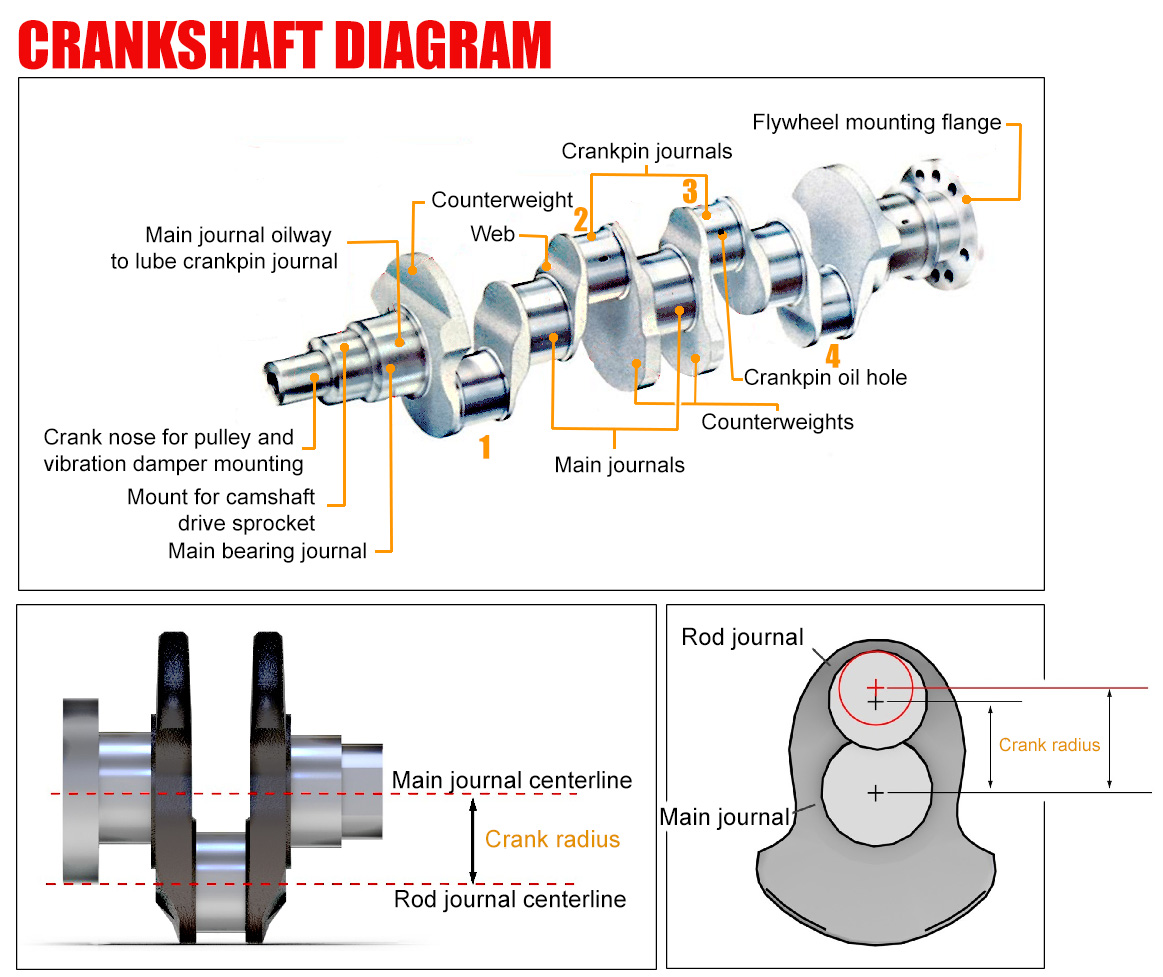
Crankshaft construction Crankshaft are responsible transmits the power created inside the cylinder and combustion chamber to the transmission through the...
Connecting rod. A connecting rod is a detail which connects a piston to a crankshaft in an engine. It provides reciprocating motion into rotating motion. A...
Car needs the engine as energy source. The engine provides mechanical power to keep the car moving. Piston engines classifications by the next signs. The...
Piston – is a component of an engine. A piston is acted upon by the pressure of the expanding combustion gases in the combustion chamber space at the top...
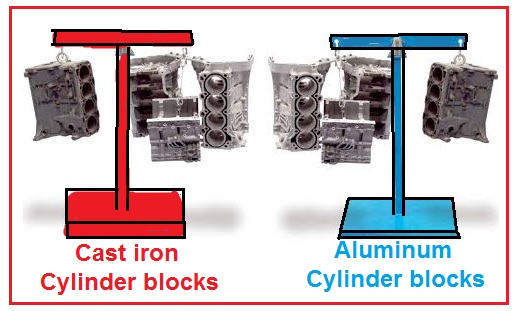
The engine cylinder block forms the basis framework of the water-cooled engine. Engine cylinder block is the construction that holds the cylinders and other...