
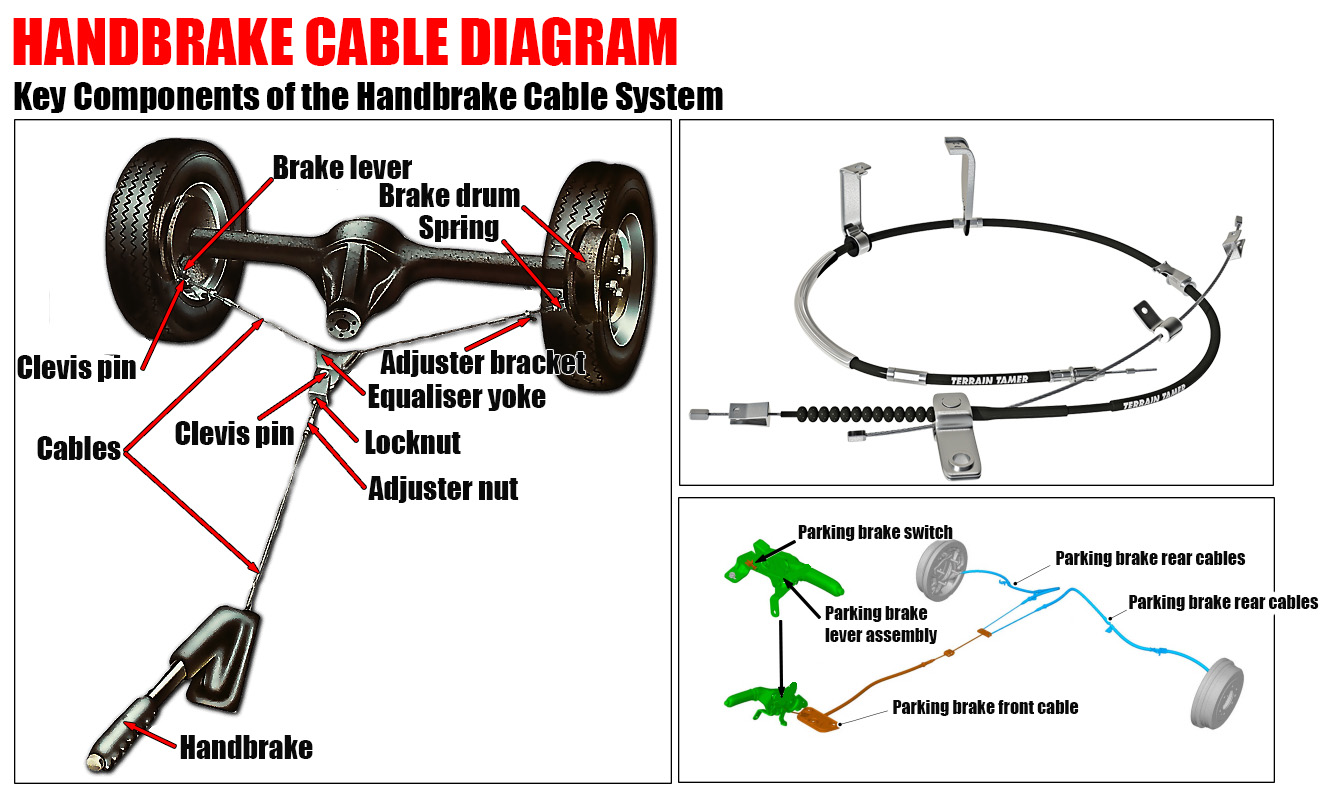
The handbrake, also known as the parking brake, is a crucial safety mechanism in any vehicle, providing a secure way to prevent the car from moving when parked. Although the layout of the handbrake cable system may vary slightly between different car models, the fundamental components and principles remain largely the same. In this article, we will break down the key elements of the handbrake cable system, explore how it functions, and discuss maintenance practices for optimal performance.
Handbrake Cable Diagram
In most vehicles, the handbrake cable system involves a primary cable running from the handbrake lever inside the cabin to a compensating bracket located beneath the car. From the compensating bracket, secondary cables lead to the rear brakes (or in some rare cases, the front brakes). This configuration ensures that both wheels receive an equal braking force when the handbrake is engaged.
The system may also include one or more adjuster screws, which allow for manual adjustment of the cable tension to compensate for stretching over time. Regular adjustment is necessary to maintain optimal performance and prevent the handbrake from becoming weak or ineffective.

Maintenance and Inspection of Handbrake Cables
Handbrake cables are subject to wear and tear, particularly from frequent use and environmental exposure. Over time, cables may stretch, fray, or become corroded, leading to reduced performance or failure. Regular maintenance and inspection are essential for ensuring the longevity and effectiveness of the handbrake system.
- Regular Inspection
It is recommended to inspect the handbrake cables every six months, or every 6,000 miles (10,000 km), whichever comes first. During these inspections, pay particular attention to areas where the cable bends sharply, as these spots are more prone to fraying.
Check the entire length of the cables for any signs of wear, rust, or damage. If the cables are enclosed in a flexible outer casing, inspect the casing for cracks or splits, which can allow water and debris to enter, causing rust and sticking.
- Lubrication
Lubrication is critical for maintaining smooth cable operation. All moving parts, including the cables and adjusters, should be clean and properly lubricated. Use brake grease or anti-seize grease to ensure smooth movement and prevent rust. Lubrication also reduces the risk of components sticking, which can prevent the handbrake from being fully applied or released. - Cable Replacement
If fraying or significant wear is detected, the handbrake cable should be replaced immediately to avoid sudden failure. The process involves removing the affected cables, thoroughly cleaning all components, and replacing any worn or damaged parts, such as clevis pins, which can wear down in the middle, becoming “waisted.”
Always replace clevis pins with new ones and ensure that split pins or spring clips are securely installed during reassembly. Grease all moving parts, including the threads of adjusters, to facilitate smooth operation.
- Adjusting the Handbrake
Cables naturally stretch over time, reducing the effectiveness of the handbrake. Adjusting the tension in the handbrake cables is essential for maintaining optimal braking force. The adjuster screw allows you to fine-tune the cable tension, ensuring that the handbrake engages with minimal lever travel.
The handbrake cable system is a vital component of vehicle safety, responsible for securely holding the car in place when parked. Regular inspection, lubrication, and adjustment are necessary to ensure the system remains functional and effective. By understanding the layout and maintenance requirements of the handbrake cable system, drivers can ensure their vehicle remains safe and reliable for years to come.