
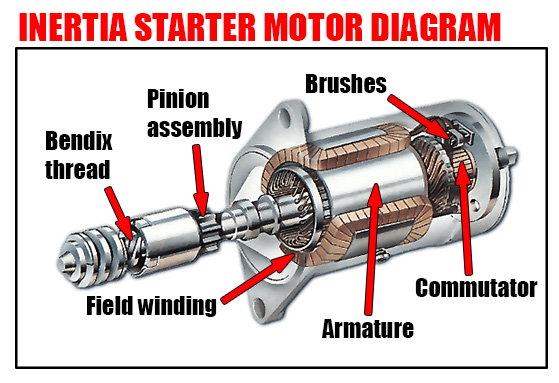
The inertia starter motor is component enabling the initial rotation necessary to start the engine. This system relies on the principles of inertia and mechanical engagement to transfer rotational motion from the starter motor to the engine’s flywheel. In this article, we will explore the structure, function, and mechanics of the inertia starter motor, focusing on its operation and the unique characteristics.
The Role of the Bendix Gear in the Inertia Starter Motor
At the heart of the inertia starter motor lies a device known as the Bendix gear. This gear plays a crucial role in engaging and disengaging the starter motor’s pinion with the flywheel’s gear ring. The engagement occurs only while the starter is turning the engine, and it disengages automatically as soon as the engine picks up speed. The Bendix gear operates in two primary systems: the inertia system and the pre-engaged system. This article focuses on the inertia system, where the pinion’s inertia is key to its operation.
The Inertia System: How It Works
The inertia starter motor relies on the inertia of the pinion to function. In mechanical terms, inertia refers to the resistance of an object to a change in its state of motion. When the starter motor begins to spin, the pinion, which is not rigidly attached to the motor shaft, initially resists this motion due to its inertia. This resistance causes the pinion to shift along the threaded motor shaft, moving it into engagement with the flywheel’s gear ring.
In an inertia-type starter, the Bendix gear is responsible for throwing the pinion toward the motor. The pinion is threaded onto the motor shaft in a manner similar to a freely turning nut on a coarse-thread bolt. As the motor spins the shaft, the inertia of the pinion prevents it from turning immediately, causing it to slide along the thread. This motion allows the pinion to engage with the flywheel gear ring, thus enabling the engine to start.
Engagement and Disengagement Mechanism
Once the pinion reaches the end of the threaded shaft, it begins to turn with the shaft, thereby turning the engine. The engagement process is mechanical, relying solely on the inertia and threading of the pinion to move it into place. As the engine starts and its speed increases, the flywheel drives the pinion faster than the starter motor’s shaft. This differential in speed causes the pinion to be thrown back out of engagement.

The disengagement process is as violent as the engagement, with the pinion being rapidly unscrewed from the threaded shaft. To absorb the shock of this sudden movement, a strong spring is placed on the shaft. This spring cushions the impact, preventing damage to the motor and reducing wear on the gear teeth.
Wear and Tear: The Drawbacks of the Inertia System
One of the main disadvantages of the inertia starter motor is the potential for significant wear and tear on the gear teeth. The violent nature of the engagement and disengagement process can cause heavy wear over time, leading to reduced efficiency and the need for more frequent maintenance. This wear is particularly problematic in high-use scenarios, where the starter motor is engaged and disengaged frequently.
The Evolution: From Inertia to Pre-Engaged Starters
Due to the inherent drawbacks of the inertia starter, the pre-engaged starter was developed as a more advanced alternative. The pre-engaged system features a solenoid mounted on the motor, which controls the engagement and disengagement of the pinion with greater precision and less wear. This system ensures a smoother and more reliable start, reducing the mechanical stress on the components involved.
The inertia starter motor, with its reliance on the principles of inertia and mechanical threading, represents a foundational technology in engine starting systems. While it has certain drawbacks, including the potential for heavy wear on the gear teeth, its simplicity and effectiveness have made it a durable choice for many applications. Understanding its operation provides valuable insight into the evolution of starter motor technology and the ongoing quest for more efficient and reliable engine starting solutions.