
Suspension Systems
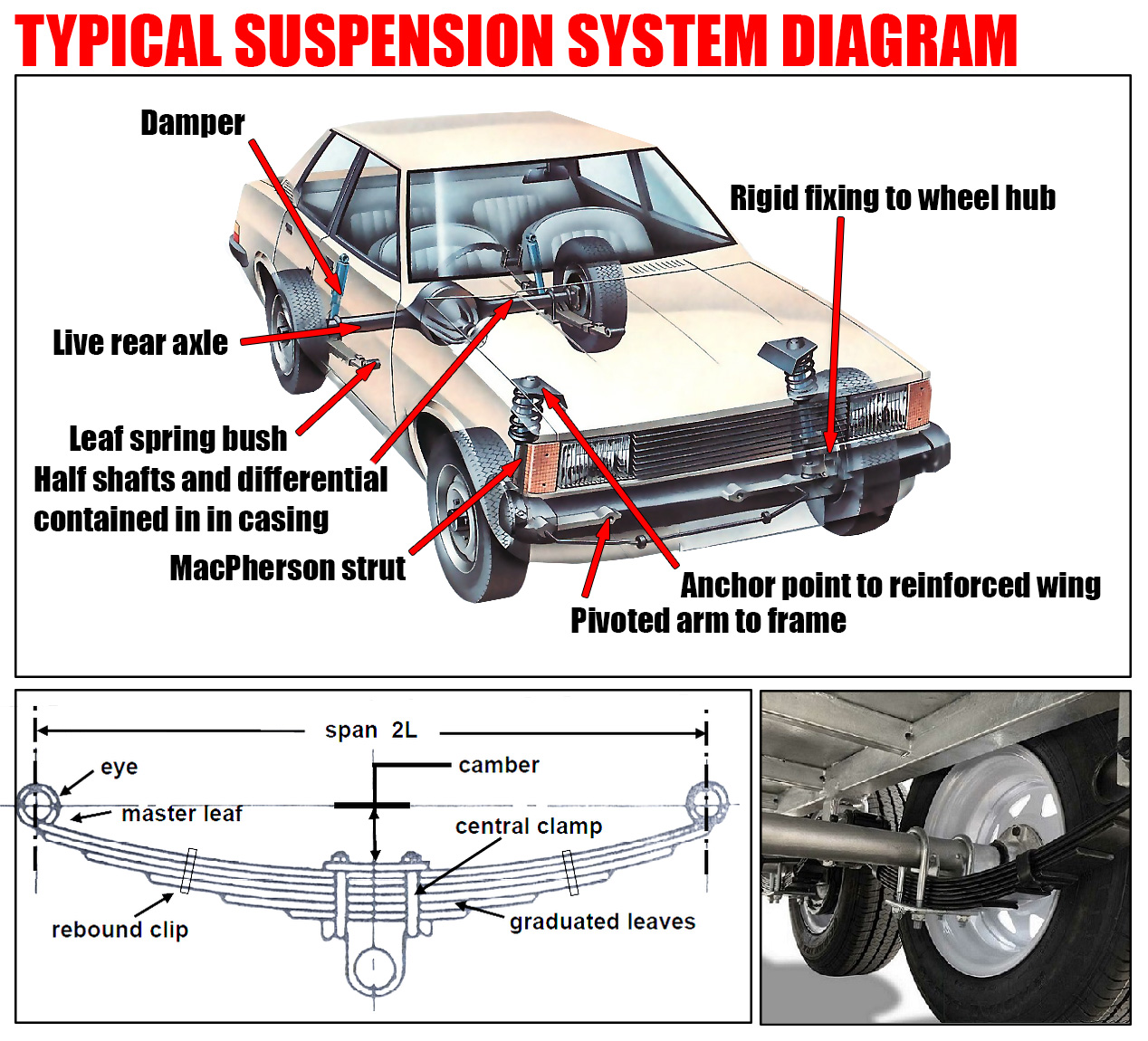
A typical suspension system in a rear-wheel-drive vehicle showcases the intricate balance between maintaining stability and providing comfort. The system often includes a live rear axle, where the axle assembly contains both the drive shafts, commonly referred to as half shafts, and the differential gears. This configuration is especially prevalent in rear-wheel-drive cars, as well as in some four-wheel-drive vehicles where the live axle might be implemented at the front.
The Role of Live Axles in Rear-Wheel-Drive Vehicles
The live axle is a robust component, but it is typically paired with leaf springs that support the vehicle’s weight and absorb road shocks. The rigidity of the live axle demands additional components like springs and links to counteract lateral movements, ensuring that the axle maintains its alignment relative to the vehicle’s chassis, thereby contributing to the vehicle’s handling characteristics.
Non-Independent Suspension: Dead Axles
In contrast, non-independent suspension systems, such as a dead axle, are becoming less common in modern passenger vehicles. The dead axle, essentially a rigid beam, is still employed in the front suspension of commercial vehicles like vans and trucks, where the demands for durability and load-bearing capacity outweigh the need for the refined ride quality that independent suspensions offer. Similarly, some front-wheel-drive cars might use a dead axle in the rear, providing a simpler and cost-effective solution that meets the functional requirements without the complexity of independent suspension systems.
Independent Suspension: The MacPherson Strut

At the front end of many rear-wheel-drive vehicles, the independent suspension is more common, often of the MacPherson-strut type. This design features a strut assembly that combines a shock absorber (damper) with a coil spring, providing a compact and efficient suspension system that improves the vehicle’s ride quality and handling. The MacPherson strut is particularly valued for its ability to offer independent movement of the wheels, allowing for better absorption of road irregularities and improving overall driving comfort.
In summary, while live axles and dead axles have their place in the automotive industry, particularly in applications where robustness and simplicity are paramount, the trend in passenger vehicles leans towards independent suspension systems like the MacPherson strut. These systems provide a superior balance of comfort, handling, and efficiency, aligning with the evolving demands of modern vehicle design.