
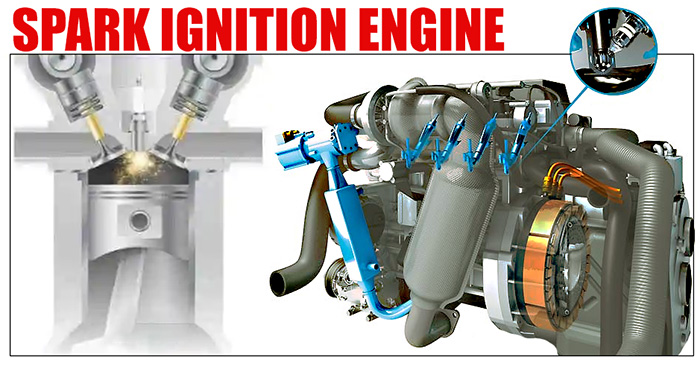
The spark ignition engine, also known as the petrol engine, operates the principle of combustion of the air-fuel mixture ignited by a spark from a spark plug.
How Spark Ignition Engine Works
The operation of the spark ignition engine starts with very interesting processes. It is necessary to mix the fuel with air in a certain proportion to get a quality air-fuel mixture. Then it moves its way into the combustion chamber, effectively forming a potent and combustible air-fuel mixture, enters the cylinder, and is subjected to compression facilitated by a piston.
At the end of the compression stroke, the ignition system comes into play, generating an electric spark that serves as the catalyst for igniting the combustible air-fuel blend. This spark triggers a controlled explosion within the combustion chamber, propelling the engine into action.
During the combustion process, the combustible gases expand forcing on the piston. The piston moves down from TDC to BDC generating engine work.
Spark ignition engine works using a complex interplay of fuel, air, compression, and controlled ignition, all coming together to harness the power of combustion to drive the car.
Working cycle
The working cycle of spark-ignition engine may be either two-stroke or four-stroke.
Working cycle of spark ignition engine consists of four strokes:
- intake stroke;
- compression stroke;
- power stroke;
- exhaust stroke.