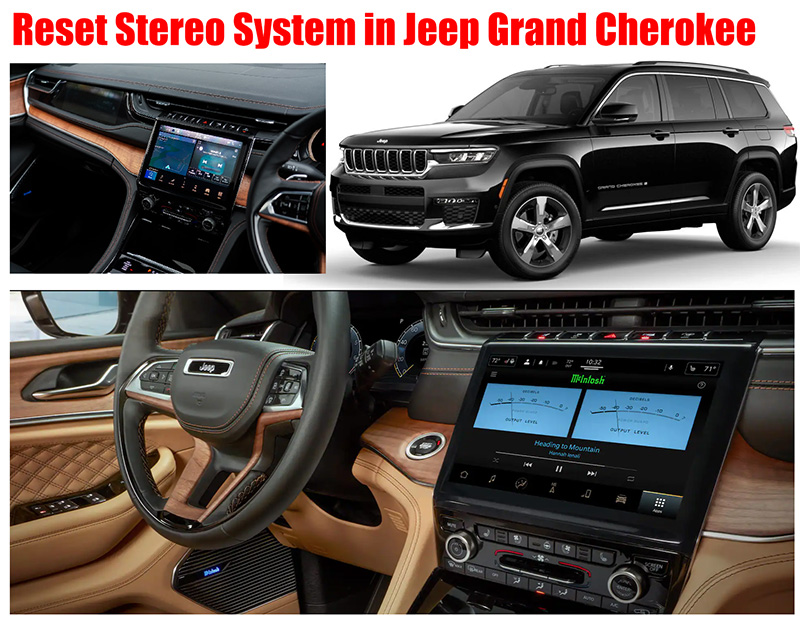
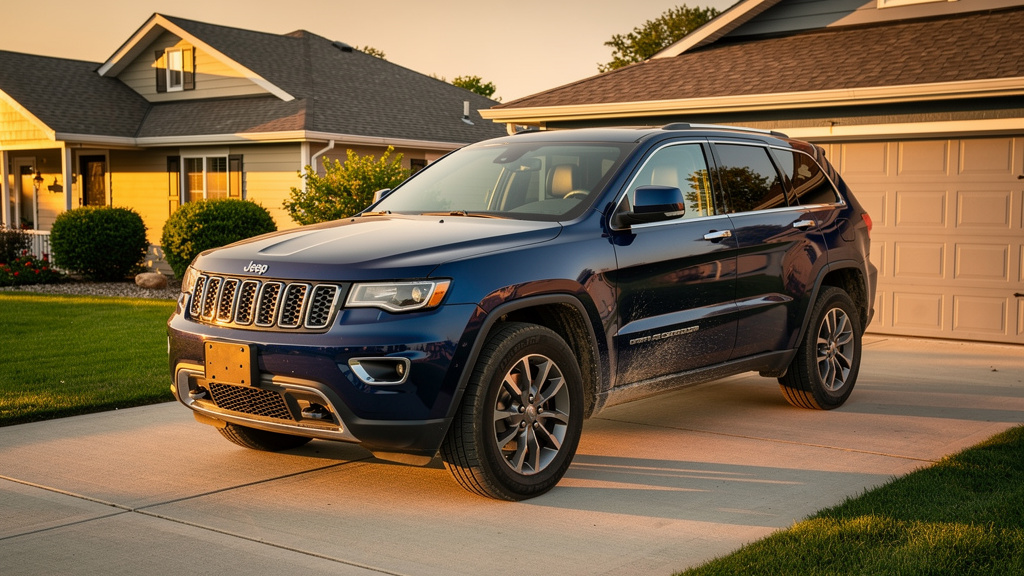
The Jeep Grand Cherokee is the model most responsible for Jeep’s reputation as both an off-road brand and a mainstream family SUV – and, as detailed in our full Jeep reliability and maintenance guide, it’s also the model where that dual identity shows up most directly in the repair bill. This guide covers the Grand Cherokee specifically: generation history, real engine and transmission specs, the exact problems to expect by component, a maintenance-cost breakdown, and a service schedule built around this model’s known weak points.
Jeep Grand Cherokee Recalls
Current open safety recalls for the Grand Cherokee, updated automatically as new campaigns are issued.

Jeep Recalls & Safety Notices
Model years 2017–2026
LIVE DATA · SOURCE: NHTSANo recalls found for this vehicle. That’s good news.
Generations, Who It’s For, and the Core Trade-Off
Five generations, each with a different reliability story:
- ZJ (1993-1998) – the original. 4.0L inline-six or 5.2L/5.9L V8. Mechanically simple, no modern electronics to fail.
- WJ (1999-2004) – bigger body, 4.0L I6 or 4.7L V8. First independent front suspension on a Grand Cherokee.
- WK (2005-2010) – introduced the 5.7L Hemi V8 and, briefly, a Mercedes-sourced 3.0L diesel V6. Widely criticized for cheap interior materials.
- WK2 (2011-2021) – the longest-running generation. 3.6L Pentastar V6, 5.7L Hemi V8, 3.0L EcoDiesel, and the 707-hp Trackhawk. Introduced Quadra-Lift air suspension and Uconnect.
- WL (2022-present) – current generation. Added a 4xe plug-in hybrid (dropped after 2025), then a new 2.0L Hurricane turbo-four for 2026 replacing the V6/V8 split. Significantly more complex electronics than any prior generation.
The Grand Cherokee is built for buyers who want genuine towing and light off-road capability without stepping down to the Wrangler’s stripped-out interior and solid front axle – it uses fully independent front suspension, so it does not carry the Wrangler’s “Death Wobble” risk. The trade-off is different: the Grand Cherokee’s air suspension, hybrid electronics, and driver-assist systems are where the money goes instead.
Technical Specs: Engines, Transmissions & Real-World Fuel Economy
Specs below cover the WK2 and WL generations – the ones still realistically on the used and new market. Real-world combined economy typically runs 10-15% below the EPA-rated figure in mixed driving.
| Generation / Engine | Years | Power | Transmission | EPA Combined (approx.) |
|---|---|---|---|---|
| WK2 3.6L Pentastar V6 | 2011-2021 | 290 hp / 260 lb-ft | 5-spd auto (2011-13), 8-spd auto (2014+) | ~19 mpg (12.4 L/100km) |
| WK2 5.7L Hemi V8 | 2011-2021 | 360 hp / 390 lb-ft | 5-spd (2011), 6-spd (2012-13), 8-spd auto (2014+) | ~17 mpg (13.8 L/100km) |
| WK2 3.0L EcoDiesel V6 | 2014-2019 | 240 hp / 420 lb-ft | 8-speed automatic | ~24 mpg (9.8 L/100km) |
| WK2 6.2L Supercharged V8 (Trackhawk) | 2018-2021 | 707 hp / 645 lb-ft | 8-speed automatic | ~13 mpg (18.1 L/100km) |
| WL 3.6L Pentastar V6 | 2022-present | 293 hp / 257 lb-ft | 8-speed automatic | ~21 mpg (11.2 L/100km) |
| WL 5.7L Hemi V8 | 2022-2023 | 357 hp / 390 lb-ft | 8-speed automatic | ~18 mpg (13.1 L/100km) |
| WL 2.0L Turbo 4xe (PHEV) | 2022-2025 | 375 hp combined | 8-speed automatic + electric motor | 56 MPGe combined |
| WL 2.0L Hurricane Turbo I4 | 2026-present | Manufacturer figures pending independent testing | 8-speed automatic | Not yet independently verified |
Common Problems & Faults
Engine & Transmission
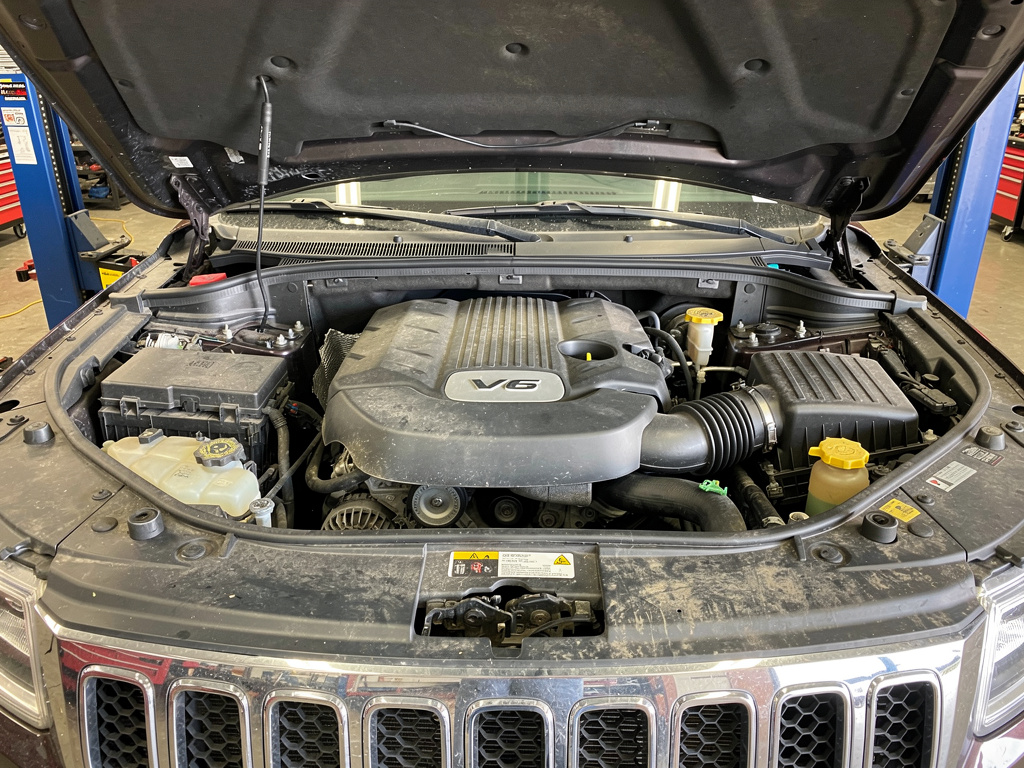
The 3.6L Pentastar V6 is the most common engine across both modern generations and is fundamentally sound, but leaks from the oil filter housing and valve cover gasket are close to universal once a vehicle passes 100,000 km (60,000 mi). The EcoDiesel V6 was the subject of a well-publicized emissions-related settlement and needs its EGR and DEF systems serviced on schedule to avoid limp-mode faults. On the transmission side, the WL generation has documented jerking under acceleration and deceleration tied to a transmission control fault (Stellantis TSB #21-049-24) – not a recall, but common enough to ask about during a pre-purchase inspection.
Electronics & Software (Uconnect and Beyond)
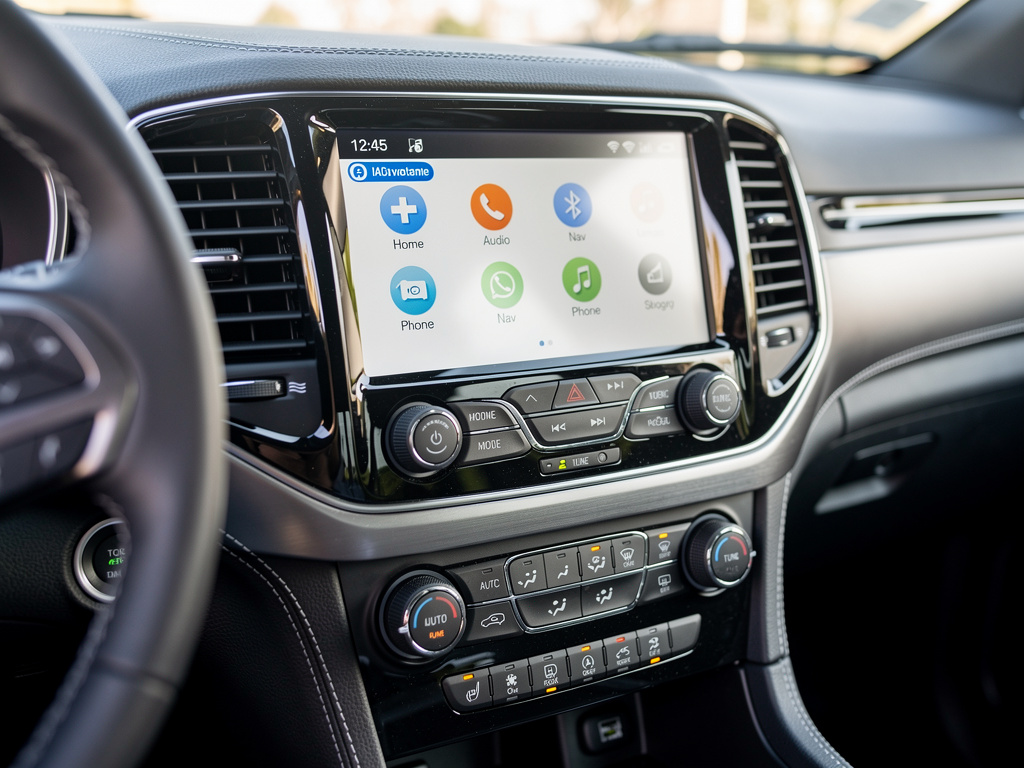
This is where the two eras diverge sharply. WK2-generation complaints are mostly about Uconnect touchscreen freezes, Bluetooth pairing failures, and backup camera dropouts – annoying, rarely safety-critical. WL-generation (2022+) electronics problems are more serious: a widely reported power steering and stability-control shutdown traced in many cases to a faulty Intelligent Battery Sensor (IBS), a rearview camera recall affecting over 1.2 million Jeep vehicles, and – specific to the 4xe plug-in hybrid – a high-voltage battery fire recall that led Stellantis to advise affected owners not to charge or park the vehicle in a garage, and to a related class-action lawsuit. Jeep discontinued the 4xe program after the 2025 model year. A liftgate that closes on its own without stopping for obstructions has also been reported on early WL builds. None of this means every WL is unreliable, but it means a pre-purchase check should include confirming which recalls have actually been completed, not just issued – see the recall lookup above.
Suspension, Steering & Chassis
The Grand Cherokee’s air suspension (Quadra-Lift, optional on Limited/Overland/Summit trims) is the single most expensive component to repair on this model: compressor failure, cracked air springs, and failing height sensors all show up more often as the system ages, especially past 100,000 km. Because the Grand Cherokee uses independent front suspension rather than the Wrangler’s solid axle, it does not develop Death Wobble – but WL-generation owners have reported a specific and unrelated fault: rear coil springs detaching from their mounts (NHTSA recall 23V-413), which is a manufacturing/mounting issue rather than a wear item. Control arm bushings, front sway bar end links, and wheel bearings wear at a fairly typical rate for a vehicle this heavy – nothing unusual for the segment.
Annual Maintenance Cost & Reliability Score
Three sources, three different angles, all worth knowing before you buy:
- RepairPal: average annual repair cost of $666 (vs. $573 for midsize SUVs generally), 0.3 shop visits per year, 13% chance a given repair is severe. Overall RepairPal reliability rating: 3.5 out of 5.0.
- J.D. Power (2026 model): Quality & Reliability score of 81/100 (“Great”), ranked #4 among midsize SUVs – this measures early ownership, not 5-10 year durability.
- Auto Reliability Index (aggregated NHTSA and owner-complaint data, 2018-2026 model years): average score of 65/100, with the 2025 model year the strongest at 75/100 and the 2018 model year the weakest at 60/100, driven mainly by electrical-system complaints.
On a simple 1-10 scale, most independent sources put the Grand Cherokee somewhere in the 6.5-8 range depending on model year and which survey is weighted – solidly average-to-good, not class-leading, with the specific year mattering more than the nameplate.
Parts that wear faster than average on this model: air suspension air springs and compressor (Quadra-Lift trims), front sway bar end links, brake pads and rotors (heavier vehicle than it looks), the 12V AGM battery (heavy electronics load drains it faster than a conventional battery), the serpentine belt (accelerated wear if an oil leak reaches it), and the oil filter housing O-ring.
Recommended Maintenance Schedule
Both the Pentastar V6 and Hemi V8 use timing chains, not belts – there’s no scheduled chain replacement, only periodic inspection.
| Interval | Service Type | What to Check / Replace |
|---|---|---|
| Every 10,000-15,000 km (~6,000-9,000 mi) or annually | Minor Service | Engine oil and filter change; tire rotation; visual check for oil filter housing and valve cover leaks; air suspension height/leak check on equipped trims |
| Every 40,000-50,000 km (~25,000-30,000 mi) | Intermediate Service | Transmission fluid inspection, spark plug inspection, brake fluid flush, cabin air filter replacement, front-end component check (control arm bushings, sway bar end links) |
| Every 80,000-100,000 km (~50,000-60,000 mi) | Major Service | Timing chain and guide inspection (not replacement unless worn), water pump and coolant system inspection, full air suspension component check on equipped trims, wheel bearing inspection, battery and full diagnostic scan to catch stored electrical-system codes before they trigger a dash warning |
Related Grand Cherokee Guides & Repairs
Model-specific how-to guides and repair walkthroughs will be linked here as they’re published.
| Guide | Status |
|---|---|
| How to Fix Uconnect Radio Issues on a 2010-2013 Grand Cherokee | Coming soon |
| Grand Cherokee Air Suspension Compressor Replacement Walkthrough | Coming soon |
| Grand Cherokee Oil Filter Housing Leak: Diagnosis & Repair Cost | Coming soon |
Frequently Asked Questions
Is the Jeep Grand Cherokee expensive to maintain?
It’s close to average for the segment – RepairPal’s $666/year figure is only slightly above the $573 midsize-SUV average. The exception is a Grand Cherokee with the air suspension option once it starts needing compressor or air-spring work; that single system accounts for a disproportionate share of the expensive repairs on this model.
What’s the best model year to buy?
Based on aggregated NHTSA and owner-complaint data, 2025 is currently the strongest WL-generation year (75/100), with 2020 and 2019 the strongest WK2-generation years. 2018 is the weakest tracked year, driven by electrical-system complaints. If you’re specifically looking at the newest generation, confirm that all WL recalls – rearview camera, coil spring, and (on 4xe models) the high-voltage battery campaign – have actually been completed on the specific VIN, not just issued.
How do I spot common problems during a pre-purchase inspection?
On air-suspension-equipped trims, let the vehicle sit overnight and check for sag the next morning – that’s a leaking air spring. Check under the oil filter housing and valve cover for fresh oil residue. On a WL, cycle the steering and check for any stability-control or power-steering warning lights after a cold start, and pull the VIN-specific recall history before agreeing on price.
Should I buy a Grand Cherokee with air suspension, or skip it?
Air suspension improves ride quality and adds load-leveling, but it’s the single most failure-prone option on this model. If the vehicle is past 100,000 km without documented suspension service, budget for a compressor or air-spring repair within the next year or two – or look for a trim with the standard coil-spring setup instead.
Which Grand Cherokee engine is the most reliable?
The 3.6L Pentastar V6 has the longest reliability track record of any engine in the lineup and is the safest choice if long-term ownership cost matters more than towing capacity or power. The EcoDiesel offers the best real-world fuel economy but adds emissions-system complexity the V6 doesn’t have.