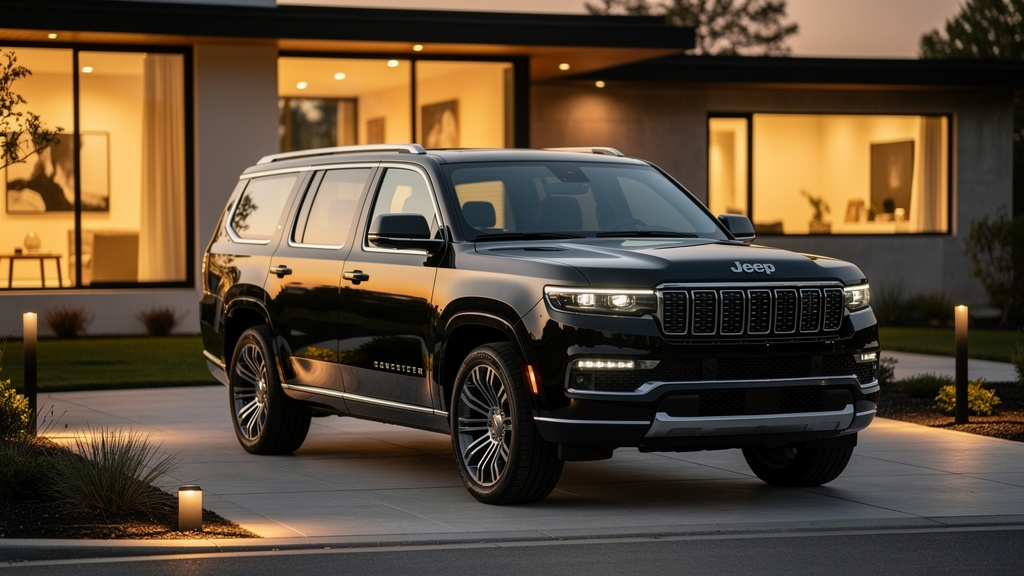
The Jeep Grand Wagoneer is the flagship of the lineup – a full-size, three-row luxury SUV positioned above the standard Wagoneer, as detailed in our full Jeep reliability and maintenance guide. This guide covers the Grand Wagoneer specifically: its short but eventful generation history, real engine specs, the exact problems to expect by component, a maintenance-cost breakdown, and a service schedule built around this model’s known weak points.
Jeep Grand Wagoneer Recalls
Current open safety recalls for the Grand Wagoneer, updated automatically as new campaigns are issued.

Jeep Recalls & Safety Notices
Model years 2017–2026
LIVE DATA · SOURCE: NHTSANo recalls found for this vehicle. That’s good news.
Generations, Who It’s For, and the Core Trade-Off
A single, still-current generation with a significant powertrain shift partway through:
- 2022 launch – all-new nameplate on Jeep’s WS platform, positioned above the standard Wagoneer. Launched exclusively with the 6.4L Hemi V8 (471 hp), 8-speed automatic, and standard four-wheel drive.
- 2023 – introduced the twin-turbocharged 3.0L Hurricane inline-six (510 hp / 500 lb-ft, the “510” high-output tune) as a new standard engine; the 6.4L Hemi V8 remained available at no extra cost for buyers who preferred it.
- 2024-present – the Hemi V8 was dropped entirely. The Hurricane twin-turbo inline-six, in Standard Output and High Output tunes, became the sole engine across the lineup.
The Grand Wagoneer is built for buyers who want three rows, genuine towing capacity, and a cabin that competes directly with full-size luxury SUVs from other brands, without giving up Jeep’s 4×4 hardware. There is no prior generation to compare against – the modern Grand Wagoneer revives a nameplate last used in 1991, but shares nothing mechanically with that vehicle. The core trade-off of a ground-up new platform and powertrain lineup launched in a compressed timeframe: early production years carry more electrical and build-quality complaints than a nameplate with a longer development runway would typically show.
Technical Specs: Engines, Transmissions & Real-World Fuel Economy
Specs below cover all three engine configurations offered since launch. Real-world combined economy on the twin-turbo inline-six tends to run close to the EPA-rated figure in mixed driving; the V8 typically runs a bit below its rating under a heavy right foot.
| Engine | Years | Power | Transmission | EPA Combined (approx.) |
|---|---|---|---|---|
| 6.4L Hemi V8 | 2022-2023 | 471 hp / 455 lb-ft | 8-speed automatic | ~15 mpg (15.7 L/100km) |
| 3.0L Hurricane Twin-Turbo I6 (Standard Output) | 2024-present | 420 hp / 468 lb-ft | 8-speed automatic | ~19 mpg (12.4 L/100km) |
| 3.0L Hurricane Twin-Turbo I6 “510” (High Output) | 2023-present | 510 hp / 500 lb-ft | 8-speed automatic | ~18 mpg (13.1 L/100km) |
Common Problems & Faults
Engine & Transmission
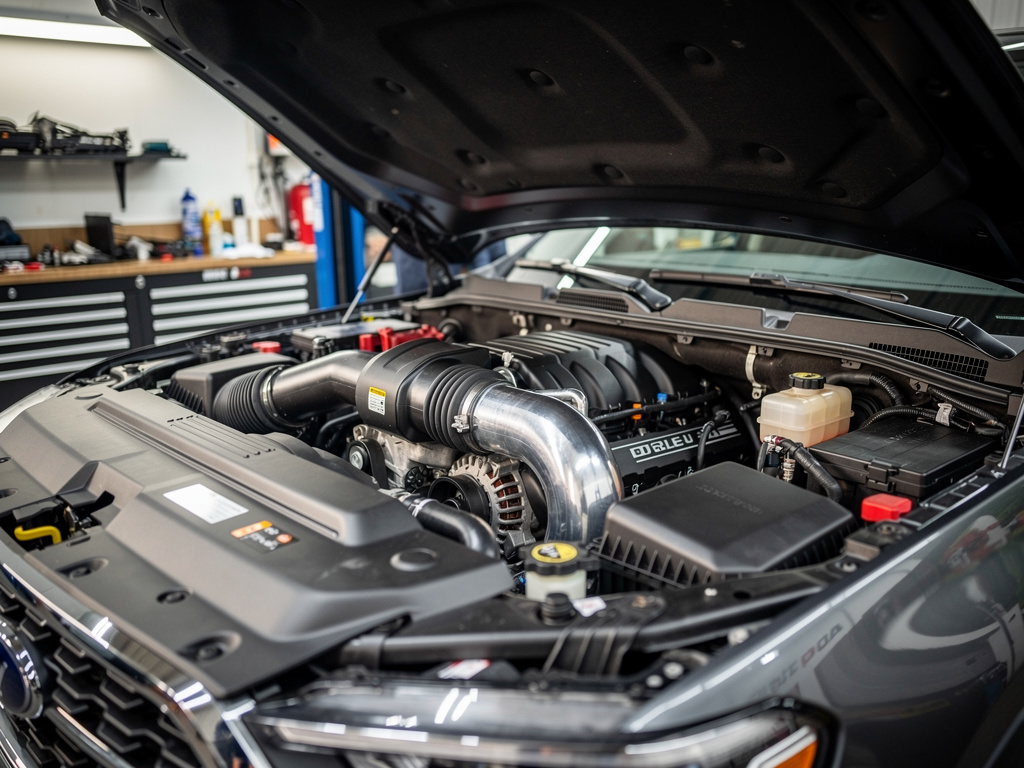
Both Hurricane inline-six tunes are new engine architecture with a limited multi-year track record compared with Jeep’s long-serving Pentastar V6 or Hemi V8, so treat any specific long-term durability claim about the Hurricane with some caution – independent testing has generally rated it well against the outgoing V8 for both power delivery and real-world economy. The 6.4L Hemi V8, in contrast, is a well-proven engine shared with other Stellantis performance models and has not shown the Hurricane’s relative lack of track record. The 8-speed automatic transmission is common across the range and has not been a significant complaint source in either configuration.
Electronics & Software
This is the Grand Wagoneer’s most consistent weak point. The 2022 model year carries the highest owner-reported problem score of any year, driven largely by electrical-system complaints tied to the vehicle’s extensive digital cabin (multiple screens, McIntosh audio integration, and driver-assist hardware). Specific recalls have addressed: a rearview camera software fault in the Central Vision Park Assist Module that can prevent the reverse-camera image from displaying, side curtain airbag interference from an improperly seated B-pillar trim panel, third-row seat belts that may not be properly accessible or fasten correctly, and a steering column control module with a welding defect that could affect driver airbag deployment in a crash. None of these are open-ended design flaws – all have documented remedies – but a pre-purchase check should confirm every recall relevant to the specific VIN has actually been completed, not just issued.
Suspension, Steering & Chassis
The Grand Wagoneer uses fully independent front and rear suspension with standard air springs, so it does not carry the Wrangler’s solid-axle Death Wobble risk. As with the Grand Cherokee’s Quadra-Lift system, the air suspension is the component most likely to need attention as the vehicle ages – compressor wear and air-spring leaks are the typical failure points on any air-suspension SUV of this size and weight, though the Grand Wagoneer’s fleet is still too young for a clear failure-rate pattern to have emerged. Given the vehicle’s curb weight (over 6,000 lbs on most trims), brake pad and rotor wear runs faster than on a lighter midsize SUV.
Annual Maintenance Cost & Reliability Score
Reliability data on this model is thinner than on Jeep’s longer-running nameplates, since the Grand Wagoneer only launched for 2022 – a limitation worth keeping in mind when weighing any of the figures below:
- Owner-complaint pattern (aggregated NHTSA and forum data): the 2022 launch year carries the highest problem score of any Grand Wagoneer model year, driven by the electrical-system issues above; complaint volume has trended down in subsequent model years as software and hardware fixes have been issued.
- RepairPal and similar third-party cost trackers do not yet publish a mature, multi-year annual-cost figure specific to the Grand Wagoneer, unlike Jeep’s longer-running models – treat any specific dollar figure you see elsewhere for this model with caution until more ownership-years of data accumulate.
On a simple 1-10 scale, a 2024-or-later Grand Wagoneer with the Hurricane inline-six and documented recall completion is a reasonable 6-7; a 2022 model with unconfirmed recall history is more of an unknown quantity given the concentration of electrical complaints in that specific year.
Parts that wear faster than average on this model: air suspension compressor and air springs, brake pads and rotors (heavy vehicle), the 12V AGM battery given the extensive always-on electronics load, and tires on 22-inch wheel packages.
Recommended Maintenance Schedule
Both the Hemi V8 and Hurricane inline-six use timing chains, not belts – there is no scheduled chain replacement, only periodic inspection.
| Interval | Service Type | What to Check / Replace |
|---|---|---|
| Every 10,000-15,000 km (~6,000-9,000 mi) or annually | Minor Service | Engine oil and filter change; air suspension height and leak check; full software/infotainment update check |
| Every 40,000-50,000 km (~25,000-30,000 mi) | Intermediate Service | Transmission fluid inspection, brake fluid flush, cabin air filter replacement (higher-than-average load given the cabin’s HVAC-hungry glass area), front and rear suspension component check |
| Every 80,000-100,000 km (~50,000-60,000 mi) | Major Service | Timing chain inspection, water pump and coolant system inspection, full air suspension component check, full electrical diagnostic scan, confirm all applicable recalls have been completed on the specific VIN |
Related Grand Wagoneer Guides & Repairs
Model-specific how-to guides and repair walkthroughs will be linked here as they’re published.
| Guide | Status |
|---|---|
| Grand Wagoneer Rearview Camera Recall: What to Check on Your VIN | Coming soon |
| Grand Wagoneer Air Suspension: Common Faults and Repair Cost | Coming soon |
| Hemi V8 vs. Hurricane Inline-Six: Which Grand Wagoneer Engine to Buy | Coming soon |
Frequently Asked Questions
Is the Jeep Grand Wagoneer expensive to maintain?
It’s too early to give a confident, data-backed annual figure – the model only launched for 2022, and mature third-party cost trackers don’t yet have enough ownership-years to publish a reliable average. Budget for a full-size luxury SUV’s typical costs (tires, brakes, and air suspension service) rather than assuming Grand Cherokee-level costs.
What’s the best model year to buy?
2024 or later, on current evidence – these carry the Hurricane inline-six exclusively (no V8 supply variability) and benefit from the software and hardware fixes issued after the 2022 launch year’s concentrated electrical complaints. If you’re considering a 2022 model specifically, verify every applicable recall has been completed on that VIN before buying.
Should I worry about the Hurricane inline-six’s long-term durability versus the old Hemi V8?
There isn’t yet enough multi-year data to make a confident long-term claim either way. Independent testing has rated the Hurricane favorably against the Hemi V8 for both performance and real-world economy, but the V8 has a much longer proven service history across other Stellantis vehicles.
Does the Grand Wagoneer have the Grand Cherokee’s Death Wobble risk?
No. The Grand Wagoneer uses fully independent front suspension rather than the solid front axle that causes Death Wobble on the Wrangler – that specific failure mode doesn’t apply to this model.
What should I check before buying a used Grand Wagoneer?
Pull the VIN-specific recall history first, since several of this model’s documented issues (rearview camera, side airbag trim, third-row seat belts, steering column module) have been addressed via recall rather than being open problems. Also check for any air suspension warning messages and confirm the vehicle doesn’t sag noticeably overnight, which would indicate a leaking air spring.