
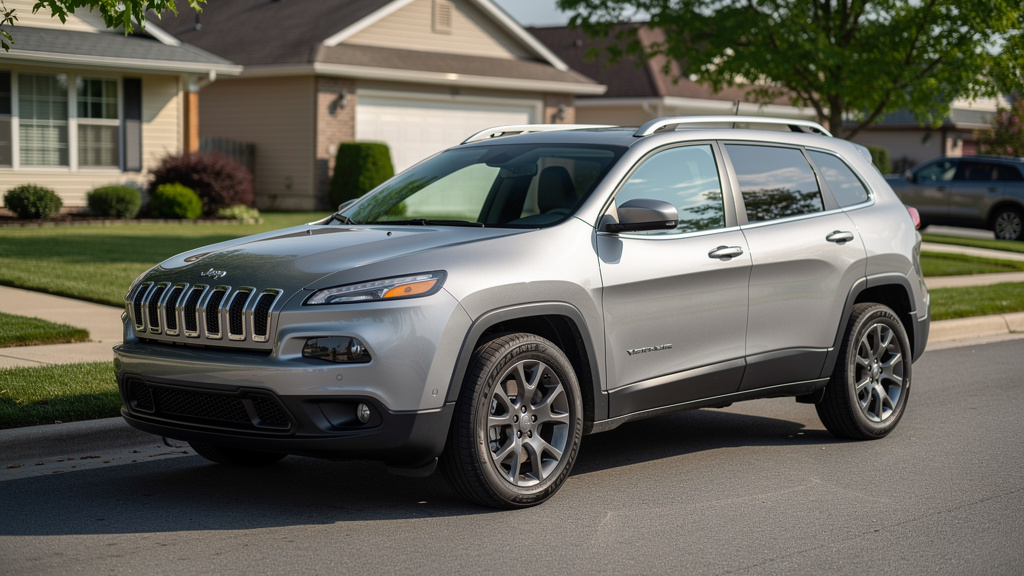
The Jeep Cherokee name covers two genuinely different vehicles with a three-year gap between them – as covered in our full Jeep reliability and maintenance guide, treating them as one continuous model would blur real, useful information. This guide covers both: the well-documented 2014-2023 KL generation that’s now a used-market proposition, and the all-new 2026 hybrid Cherokee that just returned to showrooms with effectively no ownership track record yet.
Jeep Cherokee Recalls
Current open safety recalls for the Cherokee, updated automatically as new campaigns are issued.

Jeep Recalls & Safety Notices
Model years 2017–2026
LIVE DATA · SOURCE: NHTSANo recalls found for this vehicle. That’s good news.
Two Different Vehicles Under One Name
- KL generation (2014-2023) – a compact SUV built to compete with the Honda CR-V and Toyota RAV4. Discontinued in February 2023 alongside the Renegade as Jeep narrowed its North American focus. Every KL Cherokee on the market today is a used vehicle with a real, documented ownership history to check.
- All-new 2026 generation – returned after a three-year absence as a completely different vehicle: larger, boxier, styled closer to the Grand Cherokee, and available exclusively with a new 1.6L turbo hybrid powertrain. Jeep says it’s been “reimagined from the ground up,” and mechanically that’s accurate – it doesn’t share a platform, engine, or transmission with the KL it replaced.
A used KL Cherokee is for a buyer who wants a well-understood, budget-friendly compact SUV and is willing to shop around known weak points. The new 2026 Cherokee is for a buyer who wants Jeep’s latest hybrid technology and long range, and is comfortable being an early adopter of a genuinely new platform. The core trade-off is different for each: the KL’s issue is a known, specific transmission problem you can actually check for before buying; the 2026 model’s “issue” is simply that nobody has owned one long enough yet to know what its weak points will be.
Technical Specs: Engines, Transmissions & Real-World Fuel Economy
Real-world combined economy typically runs 10-15% below the EPA-rated figure in mixed driving.
| Generation / Engine | Years | Power | Transmission | EPA Combined (approx.) |
|---|---|---|---|---|
| KL 2.4L Tigershark I4 | 2014-2023 | 180 hp / 171 lb-ft | 9-speed automatic | ~24 mpg (9.8 L/100km) |
| KL 3.2L Pentastar V6 | 2014-2018 | 271 hp / 239 lb-ft | 9-speed automatic | ~21 mpg (11.2 L/100km) |
| KL 2.0L Turbo I4 | 2019-2023 | 270 hp / 295 lb-ft | 9-speed automatic | ~23 mpg (10.2 L/100km) |
| 2026 1.6L Turbo Hybrid I4 | 2026-present | 210 hp / 230 lb-ft | Hybrid-specific automatic, standard AWD | ~37 mpg manufacturer estimate (6.4 L/100km); 500+ mile range per tank |
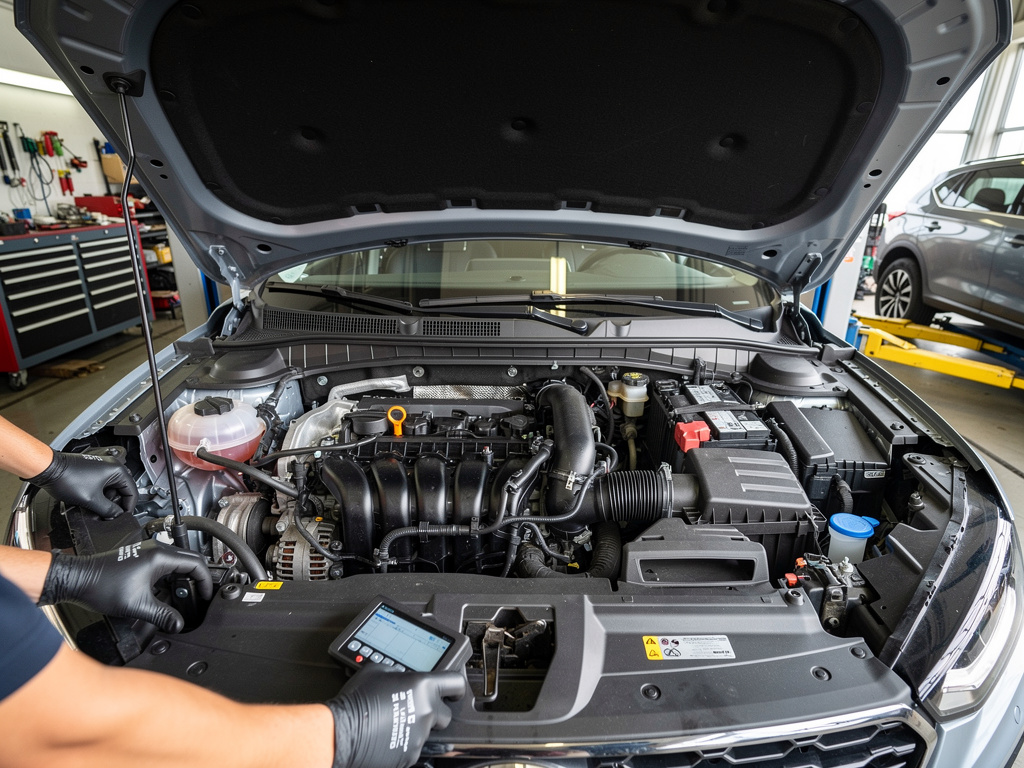
Common Problems & Faults
KL Generation (2014-2023): Documented Issues
The ZF-sourced 9-speed automatic is this generation’s defining weak point, and the pattern will look familiar if you’ve read our Renegade guide – the two models shared this transmission. Shuddering, delayed engagement, and erratic shifting between 1st and 2nd gear are the most common complaints, concentrated between 60,000 and 100,000 miles, with premature clutch pack wear driving repair costs that independent trackers put in the $2,850-4,200 range for the worst cases. A subset of vehicles were also covered by a recall for a wiring harness connector defect in the transmission’s sensor cluster, part of the roughly 500,000-vehicle Stellantis campaign that also touched the Renegade – confirm this has been addressed on any specific VIN before buying. According to RepairPal’s own reported-problem data, the single most common Cherokee complaint is oil leaks from the valve cover, oil pan, and timing cover gaskets, followed by throttle position sensor failures that can cause hard starting or stalling. Uconnect screen blackouts round out the most-reported issues, generally software-related rather than hardware failures.
2026 Generation: Too New for a Documented Problem List
The new Cherokee hasn’t been on sale long enough to generate the kind of repair-frequency data that fills the section above. What’s worth knowing instead: it uses Jeep’s first non-plug-in hybrid system, a technology combination with no track record on this platform, and it carries roughly 400 lbs more weight than the outgoing KL – both are things to watch for in reviews and owner reports as they accumulate, not documented problems today. There is no equivalent to the KL’s transmission issue to report yet, and there may never be one, but there also isn’t yet the ownership history to rule it out.
Annual Maintenance Cost & Reliability Score
Real numbers exist for the KL generation; the 2026 model doesn’t have any yet, and this section says so plainly rather than guessing.
- RepairPal (KL generation): average annual repair cost of $520 (vs. $521 for compact SUVs generally), 0.2 shop visits per year. Overall rating: 4.0 out of 5.0, ranked 9th of 26 compact SUVs – a genuinely solid score that the transmission issue doesn’t fully show, since RepairPal weighs frequency and severity together rather than any single complaint category.
- 2026 generation: no RepairPal, J.D. Power dependability, or independent complaint-index data exists yet. Reliability-tracking organizations typically need a year or more of real ownership before publishing anything statistically meaningful – the same honest caveat that applies to the Recon elsewhere on this site.
On a simple 1-10 scale: a well-documented 2019-2023 KL Cherokee (2.0L turbo, post-facelift) lands around 7; an early 2014-2016 KL without confirmed transmission history is closer to 5. The 2026 model can’t responsibly be scored yet.
Parts that wear faster than average on the KL generation: the 9-speed transmission’s clutch packs, valve cover/oil pan/timing cover gaskets, the throttle position sensor, and the 12V battery.
Recommended Maintenance Schedule
All three KL engines use a timing chain, not a belt – no scheduled replacement, only periodic inspection. The 2026 hybrid adds items no gas-only Cherokee has needed before.
| Interval | Service Type | What to Check / Replace |
|---|---|---|
| Every 10,000-12,000 km (~6,000-7,500 mi) or annually | Minor Service | Engine oil and filter change; visual check of valve cover and oil pan gaskets for seepage; on the 2026 hybrid, a 12V and hybrid-battery status check via the dash |
| Every 40,000 km (~25,000 mi) | Intermediate Service | Transmission fluid service – especially important on KL models given the documented 9-speed wear pattern, spark plug inspection, brake fluid flush, full diagnostic scan for stored transmission and throttle-position codes on KL models |
| Every 80,000 km (~50,000 mi) | Major Service | Timing chain inspection, water pump and coolant system check, wheel bearing inspection, battery and charging system test |
Related Cherokee Guides & Repairs
Model-specific how-to guides and repair walkthroughs will be linked here as they’re published.
| Guide | Status |
|---|---|
| KL Cherokee 9-Speed Transmission: Symptoms, Recall Status & Repair Cost | Coming soon |
| 2026 Cherokee Hybrid: First-Year Owner Reports Tracked | Coming soon |
| Should You Buy a Used KL Cherokee in 2026? | Coming soon |
Frequently Asked Questions
Is the Jeep Cherokee expensive to maintain?
For the KL generation, no – $520/year on RepairPal’s data is close to the compact-SUV average. The real cost risk isn’t routine maintenance, it’s buying an early KL with an undocumented, worn 9-speed transmission, which is a multi-thousand-dollar repair in the worst case. The 2026 model’s ownership costs aren’t established yet.
What’s the difference between the old Cherokee and the new one?
They’re unrelated under the skin. The KL (2014-2023) is a conventional gas-powered compact SUV with a documented, if imperfect, ownership history. The 2026 model is a larger, hybrid-only SUV on an all-new platform with no shared parts, styled to look more like the Grand Cherokee. Don’t assume anything you read about one applies to the other.
Should I avoid a used KL Cherokee because of the transmission?
Not automatically, but treat a confirmed, clean transmission history and completed recall status as a real condition of purchase, especially on 2014-2017 models. A 2019-2023 example with the 2.0L turbo and documented service is a meaningfully safer bet than an early 2.4L or 3.2L model with unknown history.
Is the new 2026 Cherokee reliable?
It’s too early to say with real data – the same honest answer that applies to any brand-new nameplate on this site. Judge it on its specs, warranty, and early reviews for now, and check the recall lookup above periodically as real-world ownership data starts to accumulate.
What’s the best KL model year to buy?
2019-2023 models with the 2.0L turbo four generally show fewer complaints than the earlier 2.4L and discontinued 3.2L V6 versions, partly because Jeep refined the 9-speed’s calibration over the generation’s run. Whatever year you’re considering, pull the VIN-specific recall history before agreeing on price.