
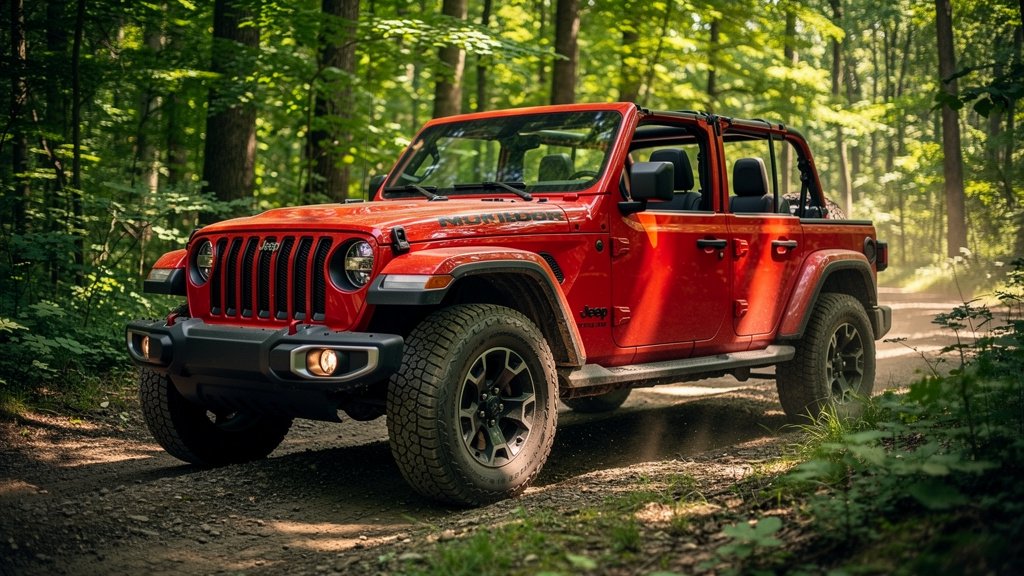
The Jeep Wrangler is the vehicle the rest of the Jeep lineup gets measured against – it is the reason the brand can credibly claim off-road authority at all. As covered in our full Jeep reliability and maintenance guide, that off-road-first design is also the direct source of the Wrangler’s most notorious reliability issue. This guide covers the Wrangler specifically: generation history, real engine and transmission specs, the exact problems to expect by component, a maintenance-cost breakdown, and a service schedule built around this model’s known weak points.
Jeep Wrangler Recalls
Current open safety recalls for the Wrangler, updated automatically as new campaigns are issued.

Jeep Recalls & Safety Notices
Model years 2017–2026
LIVE DATA · SOURCE: NHTSA| Date | Vehicle | Campaign | Component | Summary |
|---|---|---|---|---|
| 2026-07-16 | Jeep Wrangler MY 2026 | 26V456000 ↗ | WHEELS | Chrysler (FCA US, LLC) is recalling certain 2026 Jeep Gladiator and Jeep Wrangler vehicles. The walls for the steel wheels may be too thin, allowing them to crack or detach, which can result in a loss of vehicle control.Consequence Loss of vehicle control increases the risk of a crash. Remedy Dealers will inspect and replace the steel wheels and valve stems, as necessary, free of charge. Owner notification letters are expected to be mailed September 4, 2026. Owners may contact FCA customer service at 1-800-853-1403. FCA's number for this recall is 05D. Vehicle Identification Numbers (VINs) involved in this recall will become searchable on NHTSA.gov beginning July 23, 2026. |
| 2026-06-04 | Jeep Wrangler MY 2025 | 26V363000 ↗ | STEERING:HYDRAULIC POWER ASSIST:PUMP | Chrysler (FCA US, LLC) is recalling certain 2021-2025 Jeep Wrangler, Wrangler 4XE, and Jeep Gladiator vehicles. The electric hydraulic power steering pump wiring may overheat and cause a vehicle fire, even when the vehicle is parked with the ignition in the "Off" position.Consequence A vehicle fire increases the risk of injury. Remedy Owners are advised to park outside and away from structures, until their vehicle is repaired. Dealers will inspect and replace the wiring and electric hydraulic power steering pump, as necessary, free of charge. Owner notification letters are expected to be mailed July 9, 2026. Owners may contact FCA US LLC customer service at 1-800-853-1403. FCA US LLC's number for this recall is 21D. The Vehicle Identification Numbers (VINs) involved in this recall will become searchable on NHTSA.gov on June 11, 2026. |
| 2026-05-21 | Jeep Wrangler MY 2025 | 26V327000 ↗ | BACK OVER PREVENTION: SENSING SYSTEM: CAMERA | Chrysler (FCA US, LLC) is recalling certain 2019 and 2023 Chrysler Pacifica, 2024 Ram 1500, Ram 2500, and 2024-2025 Jeep Wrangler vehicles. Contamination in the central vision processing module or improper programming may cause the rearview camera image not to display. As such, these vehicles fail to comply with the requirements of Federal Motor Vehicle Safety Standard (FMVSS) number 111, "Rear Visibility."Consequence A rearview image that does not display reduces the driver's view behind the vehicle, increasing the risk of a crash. Remedy Dealers will update the central vision processing module software or replace the module, as necessary, free of charge. Owner notification letters are expected to be mailed beginning July 16, 2026. Owners may contact Chrysler customer service at 800-853-1403. Chrysler's number for this recall is 46D. Vehicle Identification Numbers (VINs) involved in this recall will be searchable on NHTSA.gov on May 28, 2026. |
| 2026-04-09 | Jeep Wrangler MY 2026 | 26V224000 ↗ | CHILD SEAT:VEHICLE TETHER ANCHOR | Chrysler (FCA US, LLC) is recalling certain 2026 Jeep Wrangler vehicles. The child seat tether welds on the second-row, right-side seat frame may be insufficient, which can reduce the seat's ability to properly restrain a child during a crash. As such, these vehicles fail to comply with the requirements of Federal Motor Vehicle Safety Standard number 225, "Child Restraint Anchorage Systems."Consequence A child that is not properly restrained during a crash can have an increased risk of injury. Remedy Dealers will replace the second-row, right-side seat frame, free of charge. Owner notification letters were mailed May 29, 2026. Owners may contact FCA customer service at 1-800-853-1403. FCA's number for this recall is 27D. Vehicle Identification Numbers (VINs) involved in this recall will become searchable on NHTSA.gov beginning April 16, 2026. |
| 2025-10-30 | Jeep Wrangler MY 2025 | 25V741000 ↗ | ELECTRICAL SYSTEM:PROPULSION SYSTEM:TRACTION BATTERY | Chrysler (FCA US, LLC) is recalling certain 2020-2025 Jeep Wrangler 4Xe and 2022-2026 Grand Cherokee 4Xe vehicles. The high voltage battery may fail internally and lead to a vehicle fire while parked or driving.Consequence A vehicle fire can increase the risk of injury. Remedy Owners are advised to park outside and away from structures and not to charge their vehicles until the remedy is completed. Dealers will update the high voltage battery software, and replace the high voltage battery, as necessary, free of charge. Some owner notification letters were mailed beginning December 17, 2025. The remaining owner notification letters will be mailed at a later date. Owners may contact Chrysler customer service at 800-853-1403. Chrysler's number for this recall is 68C. Vehicle Identification Numbers (VINs) involved in this recall will be searchable on NHTSA.gov beginning November 6, 2025. Vehicles that were previously recalled for the same issue under NHTSA Recalls 24V720 and 23V787 will need to have the new remedy performed. |
Generations, Who It’s For, and the Core Trade-Off
Four generations, all built around the same solid-front-axle formula:
- YJ (1987-1995) – the first Wrangler. 4.2L AMC inline-six or 2.5L inline-four. Square headlights, leaf-spring suspension, mechanically simple.
- TJ (1997-2006) – switched to coil springs for better articulation, brought back round headlights. 4.0L inline-six or 2.5L/2.4L four-cylinder.
- JK (2007-2018) – first four-door Unlimited option. 3.8L V6 (2007-2011), then the 3.6L Pentastar V6 (2012-2018). This generation carries the highest documented electrical-failure rate of the four.
- JL (2018-present) – current generation. 3.6L Pentastar V6, 2.0L turbo-four, 3.0L EcoDiesel V6 (2020-2023), 4xe plug-in hybrid (2021-present), and the 6.4L 392 V8 special edition.
The Wrangler is built for buyers who actually want to remove the doors and roof, air a tire down on a trail, and accept a stiffer, noisier highway ride in exchange for that capability. It is not the vehicle for someone who wants a quiet family hauler – that is what the Grand Cherokee is for. The core trade-off: the same solid front axle that makes the Wrangler exceptional off-road is the direct mechanical cause of its signature high-speed handling issue.
Technical Specs: Engines, Transmissions & Real-World Fuel Economy
Specs below cover the JK and JL generations – the ones still realistically on the used and new market. Real-world combined economy typically runs 10-15% below the EPA-rated figure, more on Rubicon trims with 35-inch-plus tires.
| Generation / Engine | Years | Power | Transmission | EPA Combined (approx.) |
|---|---|---|---|---|
| JK 3.8L V6 | 2007-2011 | 202 hp / 237 lb-ft | 6-speed manual or 4-speed automatic | ~16 mpg (14.7 L/100km) |
| JK 3.6L Pentastar V6 | 2012-2018 | 285 hp / 260 lb-ft | 6-speed manual or 5-speed automatic | ~19 mpg (12.4 L/100km) |
| JL 3.6L Pentastar V6 | 2018-present | 285 hp / 260 lb-ft | 6-speed manual or 8-speed automatic | ~20 mpg (11.8 L/100km) |
| JL 2.0L Turbo I4 | 2018-present | 270 hp / 295 lb-ft | 8-speed automatic | ~22 mpg (10.7 L/100km) |
| JL 3.0L EcoDiesel V6 | 2020-2023 | 260 hp / 442 lb-ft | 8-speed automatic | ~25 mpg (9.4 L/100km) |
| JL 4xe (2.0T + electric) | 2021-present | 375 hp combined | 8-speed automatic + electric motor | 49 MPGe combined, ~20 mpg on gas alone |
| JL 6.4L 392 V8 (Rubicon 392) | 2021-present | 470 hp / 470 lb-ft | 8-speed automatic | ~13 mpg (18.1 L/100km) |
Common Problems & Faults
Engine & Transmission – Including the Clutch Recall
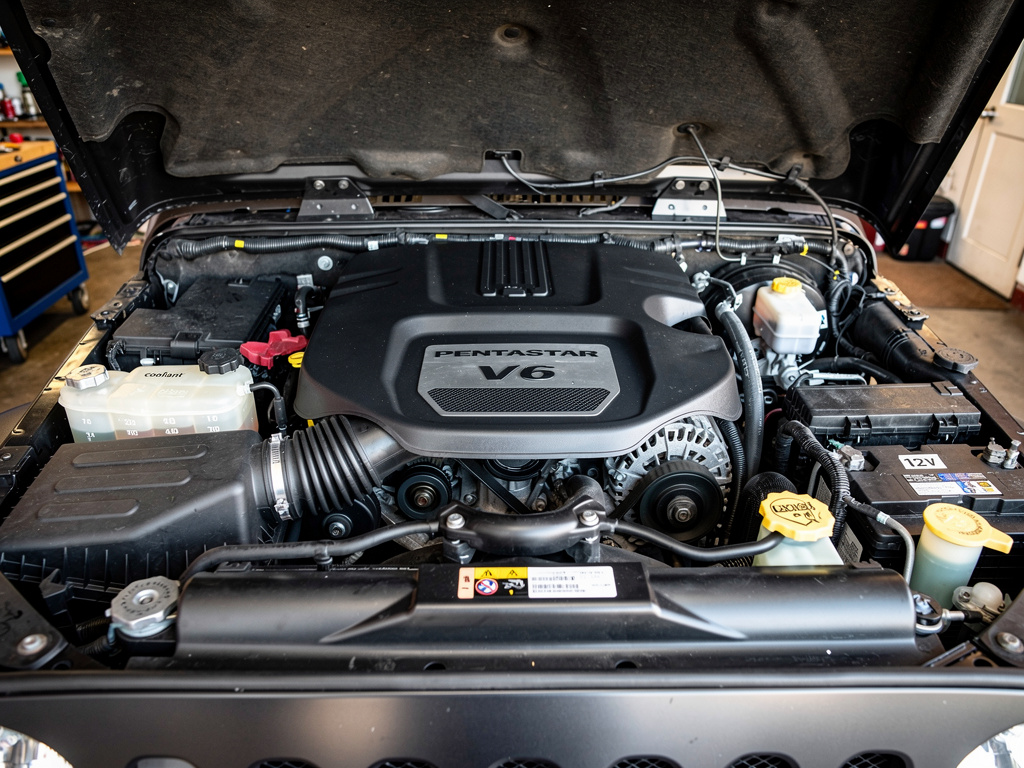
Manual-transmission JL Wranglers built between late 2018 and February 2023 are covered by a clutch pressure plate recall shared with the Gladiator – the plate can overheat under hard use, crack, and in rare cases lead to a fire or sudden loss of propulsion. Warning signs include a burnt-clutch smell or a clutch pedal that travels farther than usual. Jeep has issued more than one recall round for this (a software recalibration, then a full clutch assembly replacement), and some owners report the issue recurring even after a repair as recently as 2025. If you’re looking at a manual-transmission JL, treat a documented, complete recall repair as a condition of purchase – check the specific VIN in the recall lookup above rather than taking a seller’s word for it. Automatic-transmission Wranglers are not affected by this recall. Separately, early 3.6L Pentastar units (2012-2013) are the ones to be most careful with on the engine side: a subset suffered oil cooler housing and cylinder head failures tied to excessive oil consumption, with repair costs commonly cited in the $3,000-5,000 range when the damage is severe. Oil filter housing leaks are close to universal on any Pentastar-equipped Wrangler once it passes 100,000 km (60,000 mi), regardless of model year. The 2.0L turbo-four is newer and generally solid, but like any direct-injection engine it benefits from periodic intake-valve cleaning to manage carbon buildup. The EcoDiesel needs its emissions system serviced on schedule to avoid limp-mode faults, same as in the Grand Cherokee.
Electronics & Software
The JK generation (2007-2018) carries a specific and well-documented weak point: TIPM (Totally Integrated Power Module) failure. This single module controls fuses, relays, and several body-electrical functions at once, and when it fails it can cause random electrical faults, no-start conditions, and even fuel pump relay failures – replacement runs roughly $800-1,500. JL-generation electronics problems are less about a single failing part and more about software: the 4xe plug-in hybrid was subject to a 2022 recall covering roughly 63,000 units for a communication fault between the transmission control module and hybrid control processors that could cause a complete loss of engine power while driving, fixed via a software update. Separately, 2020-2024 Wrangler 4xe models (alongside 2022-2024 Grand Cherokee 4xe models) are covered by a high-voltage battery fire recall – Jeep’s guidance for affected, unrepaired vehicles is to avoid charging and to park away from structures. Owners of any 4xe should confirm both recalls are marked complete on their specific VIN, not just issued – see the recall lookup above. Non-hybrid JL owners occasionally report an instrument cluster going dark, a milder and separately tracked electrical fault.
Suspension & Steering
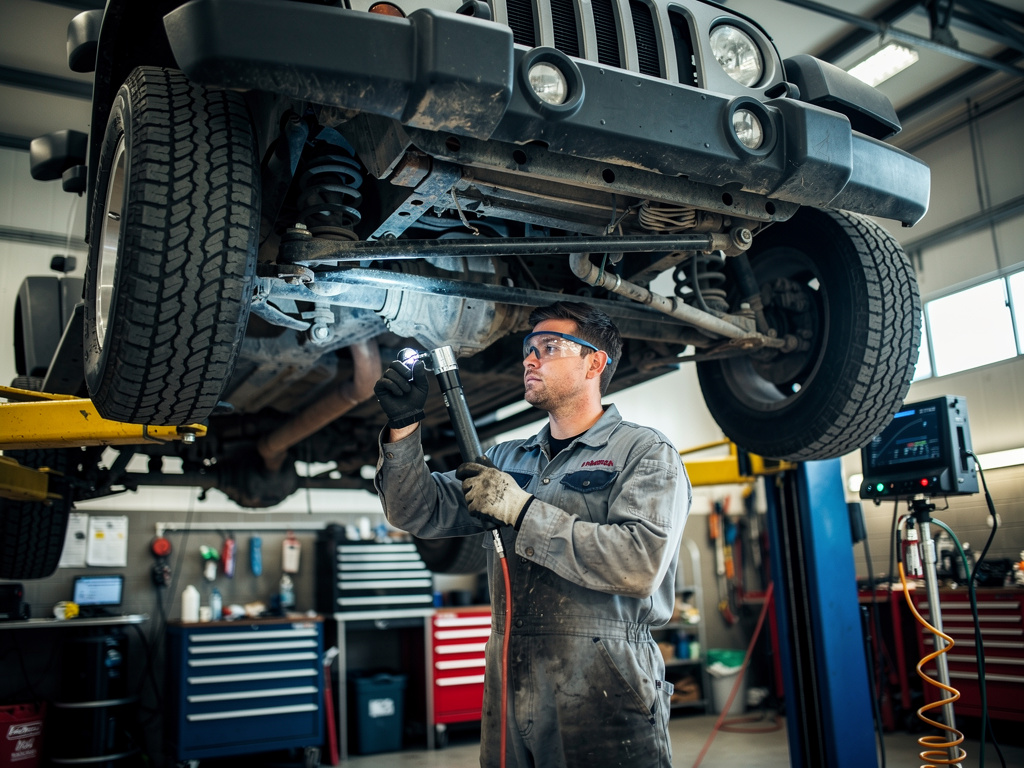
This is the section most people come to this page for. “Death Wobble” is a violent, rapid side-to-side shaking of the steering wheel and front axle, most commonly triggered by hitting a bump or pothole somewhere in the 45-55 mph range. It affects every solid-front-axle Wrangler generation, lifted or stock, and is caused by wear or looseness in front-end components rather than a manufacturing defect in one specific part:
- A worn or loose front track bar and its mounting bushings
- Play in the tie rod ends, drag link, or ball joints
- Worn control arm bushings
- Tire or wheel imbalance, which can act as the trigger even when the underlying cause is elsewhere
Repair cost scales with how many components are worn: a single part is typically $200-800, while a Wrangler that has gone a long time without front-end service can run $2,000-3,500 to fully sort out. It is fully preventable with the front-end inspection schedule below. Separate from death wobble, soft-top and hardtop seal leaks are close to universal on this model – the removable-roof design that makes the Wrangler unique also means water intrusion around door seals, roof rails, and the rear window is something almost every long-term owner deals with.
Annual Maintenance Cost & Reliability Score
Sources disagree more on the Wrangler than on most models, largely because JK and JL generations have genuinely different repair profiles:
- RepairPal (all generations blended): average annual repair cost of $694 (vs. $521 for compact SUVs generally), 0.3 shop visits per year. Overall rating: 3.5 out of 5.0, ranked 25th of 26 compact SUVs – repairs are infrequent but tend to be more severe than average when they happen.
- Generation-specific estimates from independent repair-cost trackers put the JK generation noticeably higher, around $987/year on average, against roughly $694-756/year for JL-generation gas and 4xe models respectively – consistent with the TIPM and early-Pentastar issues concentrated in the JK years.
- Auto Reliability Index (aggregated NHTSA and owner-complaint data, 2018-2026 model years): average score of 67/100, with complaint volume dropping notably by the 2025 and 2026 model years. 2018 and 2024 are flagged as weaker outlier years within that window.
On a simple 1-10 scale, a well-documented JL Wrangler lands around 7; an early JK with unknown TIPM and Pentastar service history is closer to 5-6.
Parts that wear faster than average on this model: the clutch pressure plate on manual-transmission JL examples (recall-dependent, not a normal wear item), front track bar bushings, tie rod ends and ball joints, soft-top and hardtop weatherstripping, the oil filter housing O-ring, the 12V battery (short trips and aftermarket electronics both drain it faster), and brake pads on Rubicon trims running larger, heavier tires.
Recommended Maintenance Schedule
Every Wrangler engine covered here uses a timing chain, not a belt – there is no scheduled chain replacement, only periodic inspection. The front-end check below is the single most important line item on this page; skipping it is how death wobble happens.
| Interval | Service Type | What to Check / Replace |
|---|---|---|
| Every 10,000-15,000 km (~6,000-9,000 mi) or annually | Minor Service | Engine oil and filter change; visual check of the oil filter housing for leaks; quick front-end steering check (track bar, tie rods) to catch death-wobble precursors early; on manual-transmission JLs, a clutch-smell and pedal-travel check |
| Every 40,000-50,000 km (~25,000-30,000 mi) | Intermediate Service | Transmission fluid inspection, spark plug inspection, brake fluid flush, full front-end torque check (track bar, tie rods, ball joints, control arm bushings), transfer case and 4WD low-range fluid check |
| Every 80,000-100,000 km (~50,000-60,000 mi) | Major Service | Timing chain inspection, water pump and coolant system check, soft-top/hardtop seal inspection, wheel bearing check, full electrical diagnostic scan (JK owners specifically: ask the shop to check for TIPM-related stored fault codes) |
Related Wrangler Guides & Repairs
Model-specific how-to guides and repair walkthroughs will be linked here as they’re published.
| Guide | Status |
|---|---|
| How to Diagnose and Fix Death Wobble Yourself | Coming soon |
| JL Clutch Recall: What to Check Before You Buy a Manual Wrangler | Coming soon |
| JK TIPM Failure: Symptoms, Diagnosis & Replacement Cost | Coming soon |
| Wrangler Soft Top Leak Repair: Where Water Actually Gets In | Coming soon |
Frequently Asked Questions
Is the Jeep Wrangler expensive to maintain?
It depends heavily on generation. A JL bought new and kept on schedule is close to average for the segment. A JK with unknown service history is the more expensive one to own, mainly because of TIPM and early-Pentastar risk concentrated in those model years.
What’s the best model year to buy?
2015 and 2017 JK models and 2021-2023 JL models are commonly cited as the strongest picks within their generations, avoiding the worst of the early-Pentastar and TIPM issues on one side and early 4xe software problems on the other. Complaint volume has dropped noticeably in the 2025-2026 model years. Whatever year you’re looking at, pull the VIN-specific recall history before agreeing on price – especially for any 4xe.
How do I prevent death wobble?
Have the track bar, tie rod ends, ball joints, and control arm bushings checked for play at every intermediate service, keep tires balanced and properly inflated, and get an alignment any time a steering or suspension component is replaced. A steering stabilizer can mask early symptoms but does not fix worn components – if the wobble is already happening, the fix is replacing the worn part, not adding a stabilizer.
Should I avoid a manual transmission Wrangler?
Not automatically, but don’t buy a manual-transmission JL (built late 2018 through February 2023) without verifying the clutch pressure plate recall has been completed on that specific VIN. Some owners report the issue returning even after a repair, so treat a clean recall history as a real condition of purchase rather than paperwork.
Is the 4xe hybrid worth the risk given the recalls?
Both major 4xe recalls (the engine-shutdown software issue and the battery fire risk) have documented remedies available through dealers. A 4xe with both recalls completed is not inherently riskier to drive than any other Wrangler. A 4xe with either recall still open should not be purchased, or should be a condition of sale that the seller completes before handover.
Which Wrangler engine is the most reliable?
The 3.6L Pentastar V6 from 2014 onward – after the early oil-consumption issues were addressed – has the longest track record of any current Wrangler engine and remains the simplest to maintain. The 2.0L turbo-four is a close second with less long-term data behind it.