
The Challenge of Steering Heavy Vehicles
Power-assisted steering is an essential feature in modern vehicles, particularly in heavier cars, where steering can be a physical challenge. In a vehicle without this system, the driver might find the steering either too heavy or uncomfortably slow, requiring numerous turns of the steering wheel to maneuver the car, especially in tight spaces like parking lots. This is where power-assisted steering comes into play, significantly easing the steering effort.
How Power-Assisted Steering Works
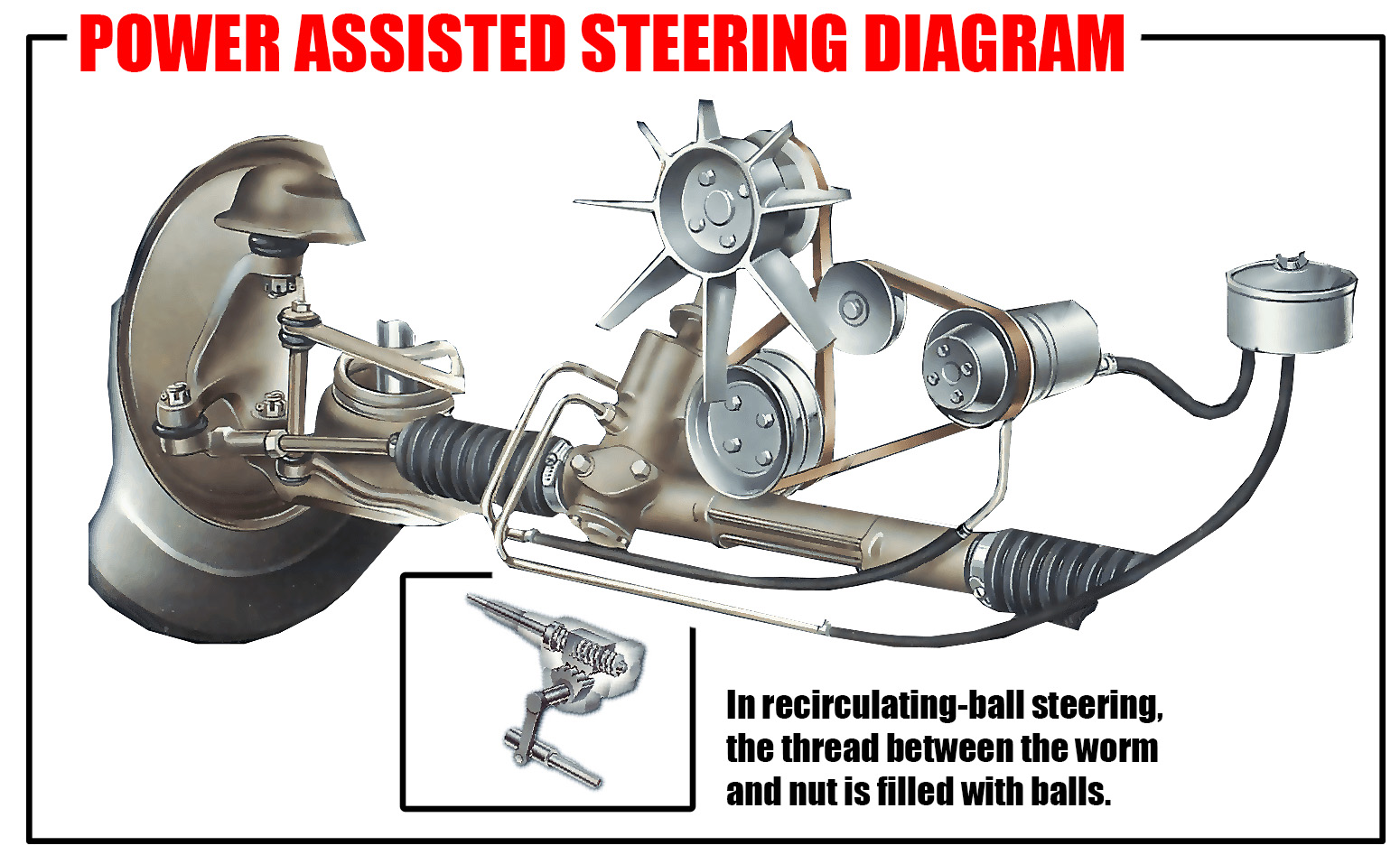
The system operates by using the engine to drive a pump that pressurizes oil. This high-pressure oil is then directed to either the steering rack or steering box. The steering system contains valves that open whenever the driver turns the steering wheel. When these valves open, they allow the pressurized oil to flow into a cylinder, where it works on a piston. This piston provides additional force to assist in turning the steering mechanism, making the steering wheel much easier to turn.

Maintaining Driver Control
Importantly, the system only activates when the driver turns the wheel. Once the wheel is no longer being turned, the valve closes, and the assistance from the piston stops. This means that while the power-assist system reduces the effort needed to steer, the steering wheel remains mechanically linked to the road wheels, ensuring the driver maintains direct control over the vehicle’s direction. This design preserves the natural feel of the steering, allowing the driver to have an intuitive and responsive driving experience while benefiting from reduced steering effort.