
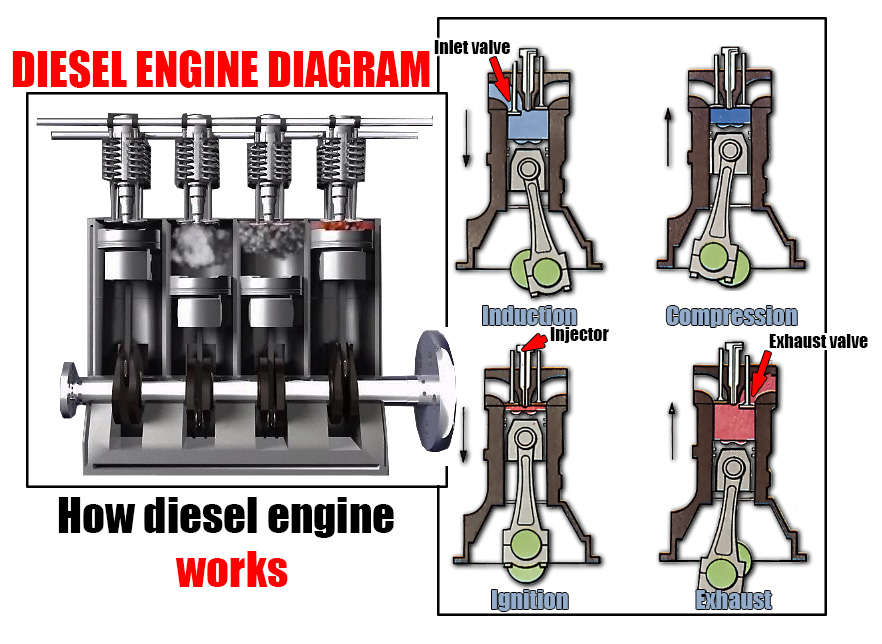
A diesel engine operates on the four-stroke cycle, similar to a petrol engine, but with significant differences in fuel ignition and power regulation. Understanding the basic components and their functions helps clarify these distinctions.
How Diesel Engine Works
Induction: As the piston starts its downward movement within the cylinder bore, the inlet valve opens, allowing fresh air to be drawn into the cylinder. This phase is critical for ensuring the engine has the necessary air for the combustion process.
Compression: Once the piston reaches the bottom of its stroke, the inlet valve closes. The piston then ascends, compressing the air within the cylinder. This compression significantly increases the air’s temperature, setting the stage for the subsequent ignition phase.
Ignition: At the peak of the compression stroke, fuel is precisely injected into the highly compressed, hot air. The extreme temperature causes the fuel to spontaneously ignite, generating a powerful force that drives the piston downward, producing the engine’s power output.
Exhaust: Finally, as the piston ascends once more, the exhaust valve opens. This allows the expulsion of the spent gases, clearing the cylinder and preparing it for the next cycle. This process ensures the engine operates efficiently by continuously removing exhaust gases from the combustion chamber.
