
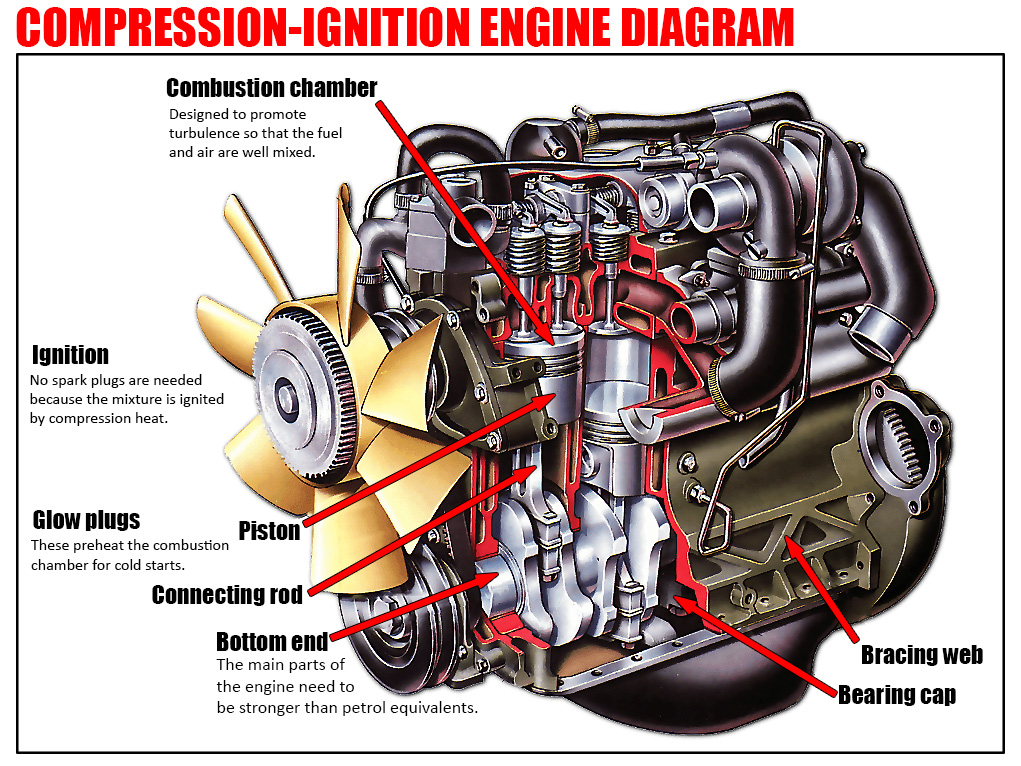
Compression-ignition engines, commonly known as diesel engines, are a cornerstone of automotive technology, particularly in vehicles where efficiency and durability are paramount. While many diesel engines share their basic design with petrol engines, they are specifically adapted to withstand the unique demands of diesel combustion. This article provides a concise overview of how diesel engines operate, their key components, and the advantages they offer over petrol engines.
Diesel Engine Design and Operation
At the heart of a diesel engine’s operation is the principle of compression ignition. Unlike petrol engines, which use spark plugs to ignite the air-fuel mixture, diesel engines rely on the heat generated by compressing air within the cylinder to ignite the fuel. This process requires much higher compression ratios, typically ranging from 14:1 to 25:1, compared to the 8:1 to 12:1 ratios found in petrol engines.
To accommodate these higher pressures, the major components of a diesel engine—such as the cylinder block, pistons, and crankshaft—are often strengthened compared to their petrol counterparts. Fuel is delivered to the engine via an injection pump and metering unit, which are usually mounted on the side of the engine block. These components are responsible for precisely controlling the timing and quantity of fuel injected into each cylinder, ensuring efficient combustion and power delivery.
Advantages of Diesel Engines
One of the primary advantages of diesel engines over petrol engines is their superior fuel efficiency. The higher compression ratio in diesel engines allows them to extract more energy from the same amount of fuel, making them more efficient overall. This efficiency translates to lower running costs, as diesel engines generally consume less fuel per mile compared to petrol engines.
Additionally, diesel fuel tends to be cheaper than petrol in many regions, further reducing the cost of operating a diesel-powered vehicle. However, it is important to note that fuel prices can vary significantly by location, and in some areas, the price advantage of diesel may be less pronounced.
Another advantage of diesel engines is their longevity and durability. Diesel engines are built to withstand high levels of stress, which often results in longer service intervals and a longer overall lifespan compared to petrol engines. However, it is worth mentioning that diesel engines typically require more frequent oil changes to maintain optimal performance and prevent wear.
The Trade-offs
While diesel engines offer several benefits, they are not without their drawbacks. Diesel engines tend to be heavier and more expensive to manufacture than petrol engines due to the need for reinforced components. This can lead to a higher upfront cost for diesel vehicles. Additionally, diesel engines are often noisier and produce more vibrations than their petrol counterparts, which can affect the overall driving experience.
Moreover, while diesel engines have traditionally been favored for their lower emissions of carbon dioxide (CO2) compared to petrol engines, they can produce higher levels of nitrogen oxides (NOx) and particulate matter, which are harmful pollutants. This has led to increased scrutiny and regulation of diesel engines, particularly in urban areas with strict emissions standards.

Compression-ignition engines, or diesel engines, offer a compelling combination of efficiency, durability, and cost-effectiveness, making them a popular choice for a wide range of vehicles. While they require robust construction to handle the high pressures of diesel combustion, their advantages in fuel efficiency and longevity often outweigh the drawbacks of higher initial costs and maintenance requirements. As technology continues to evolve, diesel engines remain a vital component of the automotive landscape, particularly in applications where reliability and fuel economy are paramount.