
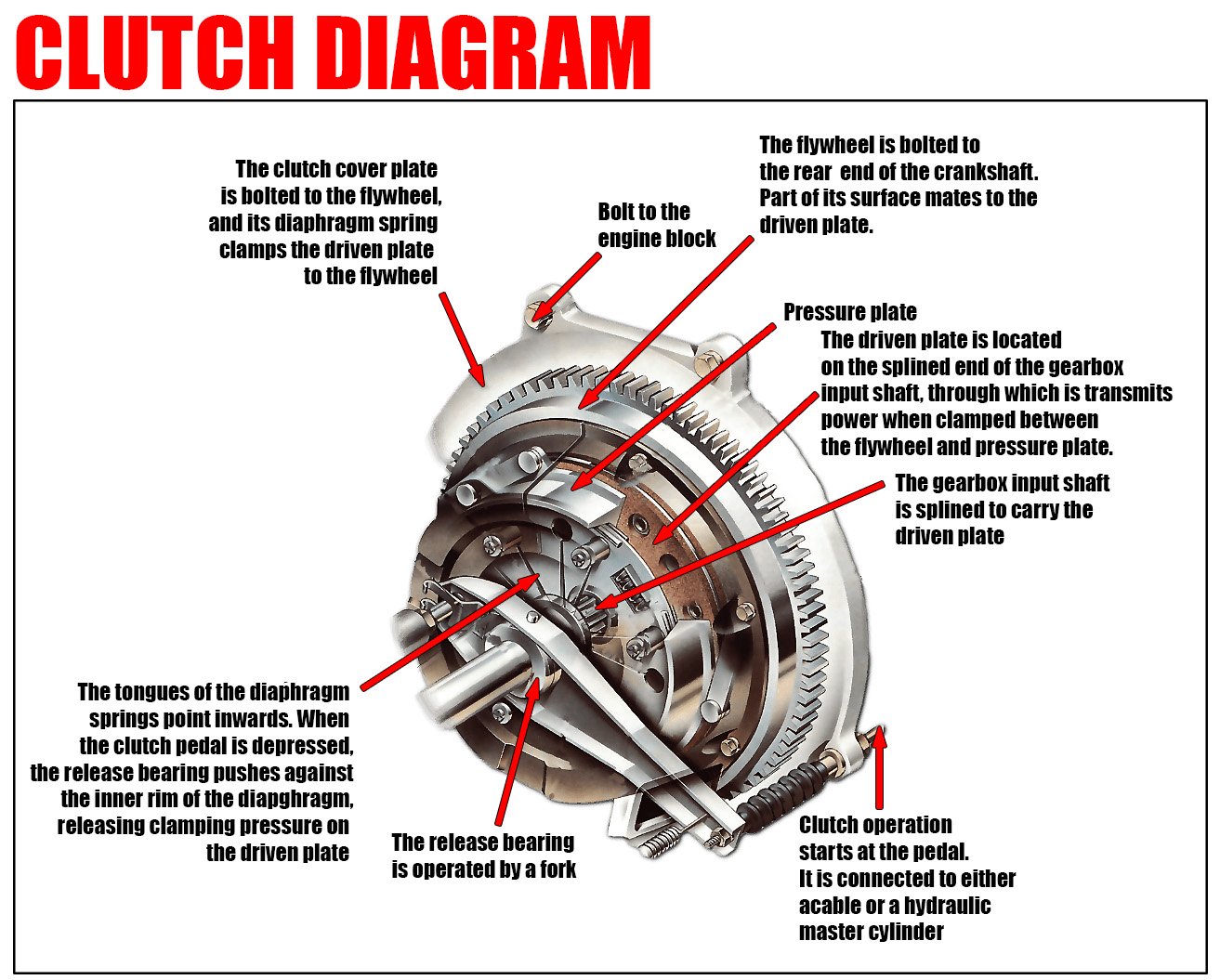
The clutch system is a fundamental component of automotive engineering, serving as the bridge between the engine’s power and the vehicle’s ability to move and change gears. This system allows for the interruption of power transmission, facilitating smooth gear selection and ensuring seamless operation of the vehicle. Let’s delve into the intricacies of the clutch system, with a focus on its components and the mechanics behind its operation.
Hydraulic Clutch System: The Heart of Power Transmission
In most vehicles, the clutch system operates using a friction mechanism, which can be actuated either hydraulically or, more commonly, via a cable. When the vehicle is in motion and under power, the clutch remains engaged, maintaining a constant connection between the engine and the gearbox. This connection is upheld by a pressure plate, which is bolted directly to the flywheel. The pressure is applied through a diaphragm spring, or in older vehicles, a series of coil springs, which ensures that the driven plate remains in firm contact with the flywheel.
The driven plate, also known as the friction plate, is a critical component that transmits power to the gearbox through a splined input shaft. This plate is equipped with friction linings on both sides, similar to brake linings, which facilitate smooth power transfer when the clutch is engaged.
The Mechanics of Engagement and Disengagement
The operation of the clutch involves a delicate balance between engagement and disengagement. When the clutch pedal is depressed, the system disengages. An arm within the clutch system pushes a release bearing against the center of the diaphragm spring, effectively releasing the clamping pressure exerted by the pressure plate. As a result, the driven plate is no longer clamped to the flywheel, interrupting the power transmission and allowing the driver to change gears.
Once the clutch pedal is released, the thrust bearing retracts, and the diaphragm spring re-engages, clamping the driven plate back onto the flywheel. This action resumes the transmission of power from the engine to the gearbox, enabling the vehicle to continue its motion seamlessly.
Hydraulic Actuation: Precision in Control
In some vehicles, the clutch system is hydraulically actuated, providing a more precise and smooth control mechanism. The clutch pedal, when pressed, activates a piston within a master cylinder located inside the car. This piston pressurizes a fluid-filled pipe that leads to a slave cylinder mounted on the clutch housing. The slave cylinder, in turn, is connected to the clutch release arm, translating the hydraulic pressure into mechanical movement that disengages the clutch.
Key Components of the Modern Clutch
A modern clutch system is composed of four main components, each playing a vital role in its operation:
- Cover Plate: This component, bolted to the flywheel, houses the diaphragm spring and is responsible for exerting pressure on the driven plate.
- Pressure Plate: The pressure plate works in conjunction with the cover plate to apply pressure to the driven plate, ensuring firm contact with the flywheel.
- Driven Plate: Situated between the pressure plate and flywheel, the driven plate is lined with friction material on both sides. This allows for smooth engagement and controlled slipping when the clutch pedal is partially depressed.
- Release Bearing: The release bearing facilitates the disengagement of the clutch by pushing against the diaphragm spring, releasing the pressure on the driven plate.

The Engineering Behind the Clutch
The clutch system is a marvel of engineering, designed to handle the immense power generated by the engine while providing the driver with the ability to control that power with precision. Whether operated hydraulically or by cable, the clutch remains an essential component in the smooth operation of any vehicle, reflecting the intricate balance of forces at play in modern automotive design.