
The process of converting fuel into engine power begins with the intricate task of mixing petrol with air in a component known as the carburetor. This device carefully blends the two elements to create a highly combustible mixture, setting the stage for efficient combustion within the engine.
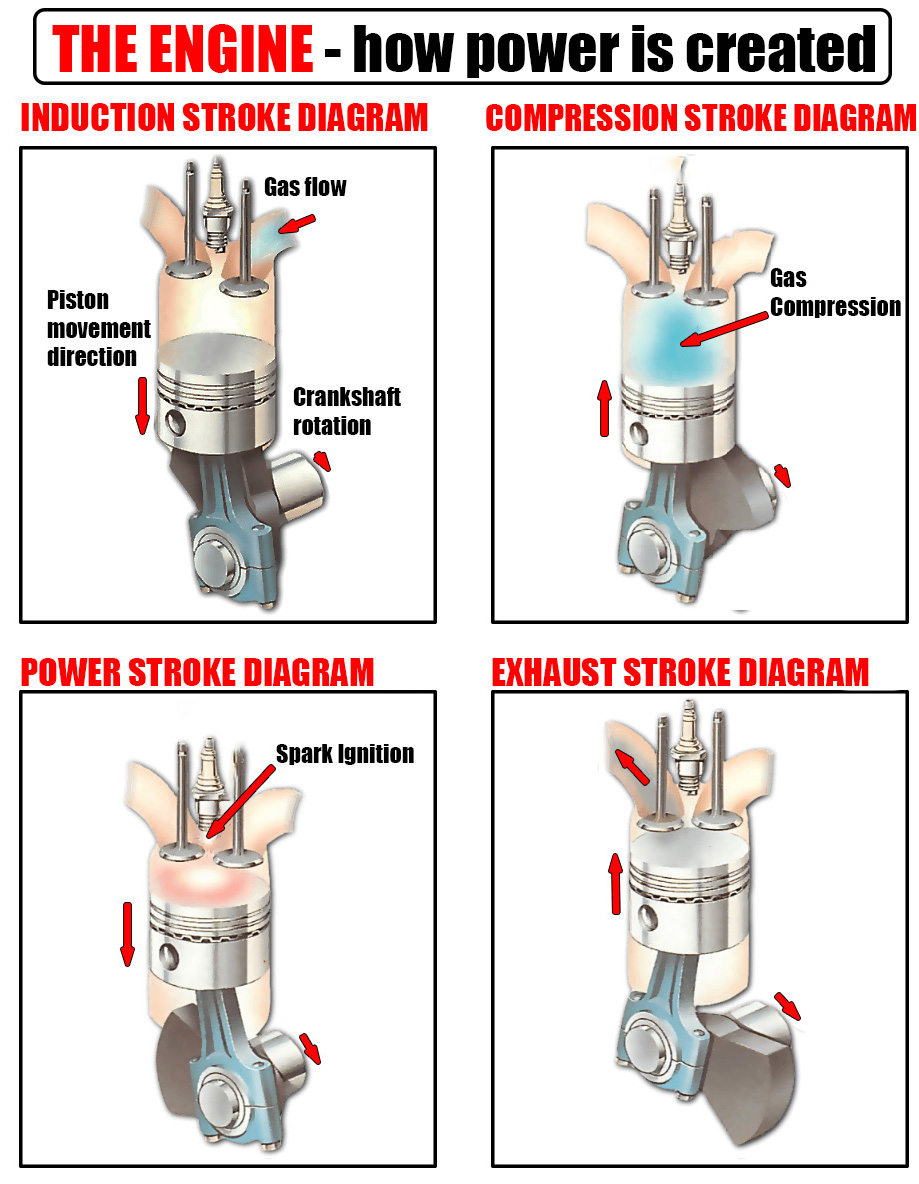
During the induction stroke of the engine cycle, the piston moves downward, creating a vacuum in the cylinder. This movement coincides with the inlet valve being fully open, allowing the air-fuel mixture to rush into the combustion chamber, while the exhaust valve remains firmly closed, ensuring that the cylinder is sealed and ready for the next phase of the engine cycle.

During the compression stroke, as the piston moves upward, the exhaust valve remains firmly shut while the inlet valve gradually closes. This action ensures that the air-fuel mixture is effectively sealed within the combustion chamber, preparing it for the ignition phase.

In the power stroke of an engine, the ignited gases from the combustion process forcefully expand, driving the piston downward with considerable force. This powerful downward movement is facilitated by the fact that both the inlet and exhaust valves are securely closed, ensuring that the energy from the combustion is efficiently harnessed to produce the engine’s power output.

As the piston ascends during the exhaust stroke, the exhaust valve opens, providing a pathway for the hot gases within the cylinder to escape. This crucial step clears the combustion chamber of spent gases, making room for a fresh charge of air and fuel in the subsequent cycle.
