
Introduction: Catalytic Converters and High-Performance Engines
In this article, we will examine whether the widely circulated opinion on the internet—that high-performance engines should avoid using catalytic converters—is accurate. Alternatively, we will consider if this belief is a misconception, and whether high-powered engines can perform effectively with catalytic converters. We are analyzing it to determine the validity of this claim.
Understanding Flow Restriction in Catalytic Converters
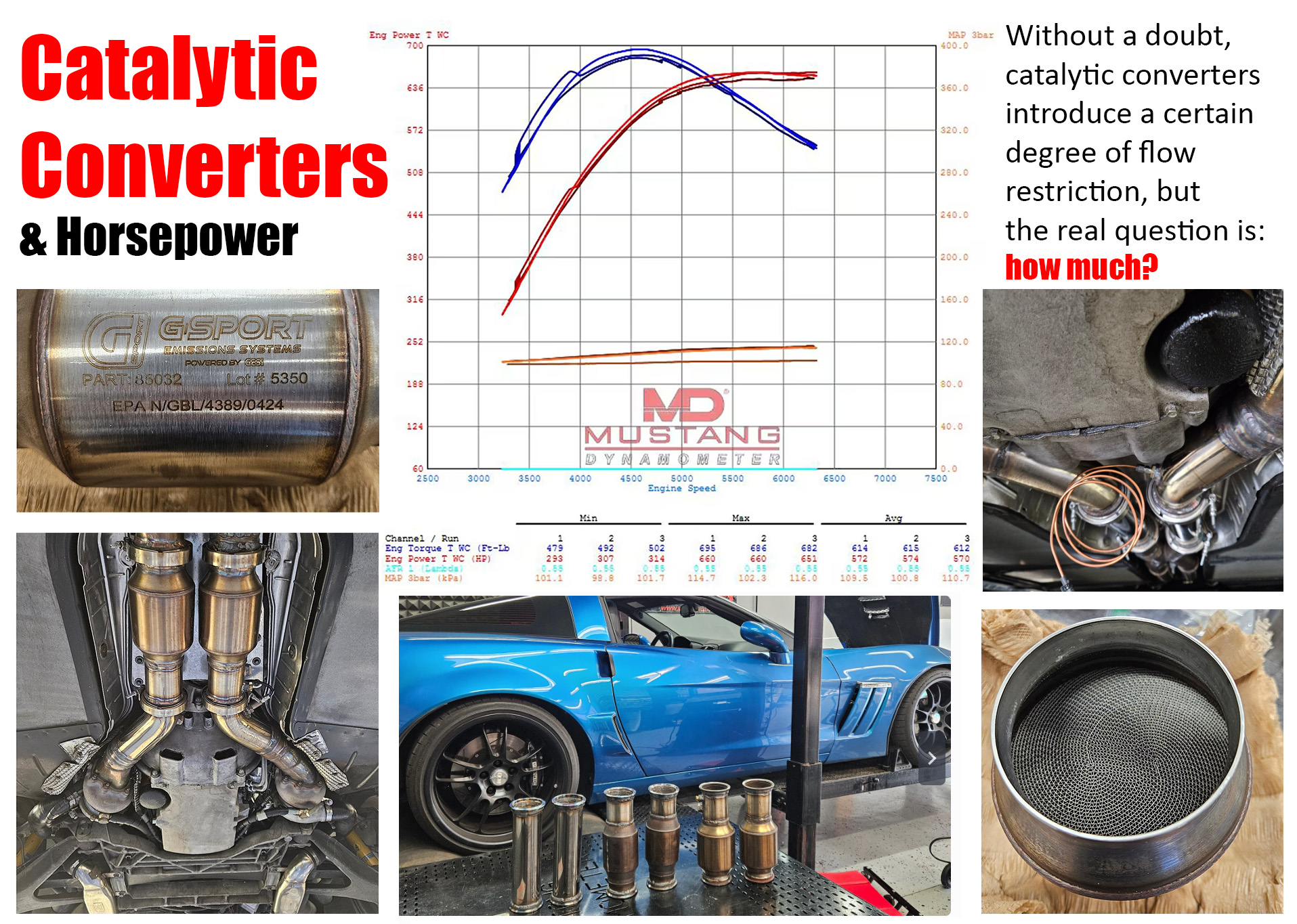
Without a doubt, catalytic converters introduce a certain degree of flow restriction, but the real question is: how much? And, more importantly, does this restriction have a significant impact on engine performance, or is it negligible? Engineers typically refer to this restriction in terms of backpressure when designing exhaust systems, and engine development teams often rely on a general rule of thumb regarding how much this backpressure costs in terms of horsepower.
Quantifying the Impact of Backpressure on Performance
To break it down, you can calculate the impact by multiplying the backpressure by the square inches of the engine’s piston area. This force acts directly on the crankshaft during the exhaust stroke, effectively opposing the power generated by the other cylinders’ power strokes. When this force is factored over the stroke radius and engine speed, it translates into a measurable power loss.

The Practical Effect: Horsepower Loss Due to Backpressure
In practical terms, after running the calculations, a typical engine will experience a loss of roughly 3 horsepower for every PSI (pound per square inch) of exhaust backpressure. While this number may seem small, in the context of high-performance engines where every horsepower counts, it’s a factor worth considering. However, it’s important to remember that modern catalytic converters have been engineered to minimize such losses, making them a manageable trade-off for their environmental benefits.