
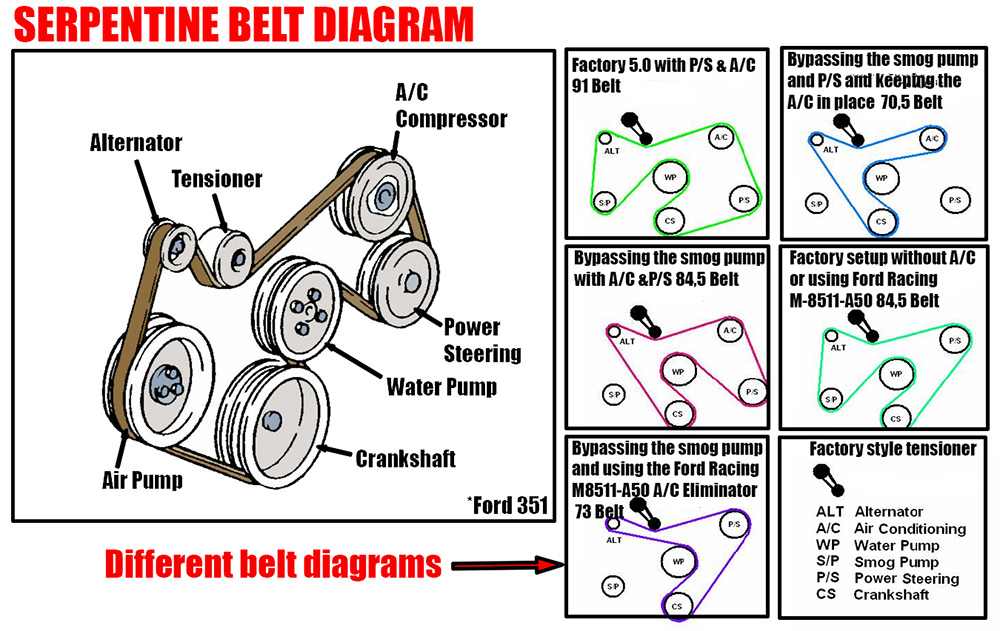
The serpentine belt is a single, continuous multi-ribbed belt that winds around several pulleys to drive engine accessories – typically the alternator, power steering pump, and A/C compressor, and on some engines the water pump too. Ford trucks (F-150, Super Duty, and the E-Series covered elsewhere on this site) route it from a pulley on the crankshaft, through each accessory pulley, and back around a spring-loaded automatic tensioner and one or more idler pulleys that keep the routing correct and the belt properly tensioned.
The exact routing differs by engine and model year – Ford prints a routing diagram on a decal under the hood (usually on the fan shroud or radiator support) specific to that engine’s accessory configuration, which is the most reliable reference for a specific truck rather than a generic diagram.
Signs it needs attention
- Squealing or chirping, especially on a cold start or when accessories are under load – usually slippage from a glazed or loose belt.
- Visible cracking across the ribs, or fraying along the edges (edge wear often points to a misaligned pulley, not just an old belt).
- Flutter or excessive movement along the longest visible run of belt while the engine is running.
- A rough or noisy idler/tensioner pulley when spun by hand with the belt off – a common cause of belts wearing out faster than expected even when new.
Serpentine belts commonly last 60,000-100,000 miles, but tensioners and idler pulleys wear on a similar cycle and are worth replacing at the same time – a fresh belt on a weak tensioner tends to fail early. Oil or coolant contamination on the belt surface will also shorten its life regardless of mileage, so any leak nearby is worth fixing before or alongside a belt replacement.